Sneakprint ShoeFactory Turns Smartphone Foot Scans Into Custom 3D Printable Slides
Sneakprint’s ShoeFactory sells scan-fitted Easy Slide STL files for EUR 64.99, shifting printing and material choices to the customer.
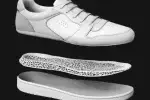
Sneakprint’s ShoeFactory puts the fitting data and printable geometry in the customer’s hands: buyers scan their feet, customize a slide in a browser, then print it themselves. The Munich-based startup launched the platform with one model, the Easy Slide, priced at EUR 64.99. The approach removes footwear production and delivery from Sneakprint’s workflow, while making the buyer’s printer, material selection and print quality part of the finished product.

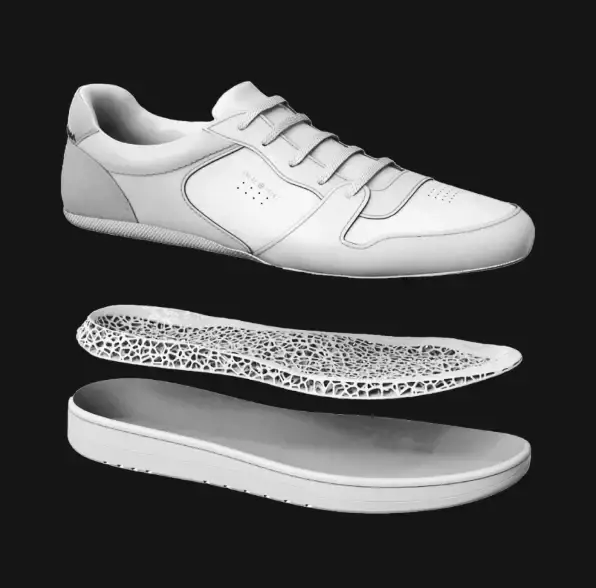
A scan drives each side of the design
ShoeFactory requires a foot scan before a customer can place an order. The scan remains attached to the cart, and subsequent versions of the design draw on the same measurements. The Easy Slide is generated as two separate parts, one for each foot, accounting for the differences that can exist between a person’s left and right feet.
The scanning technology comes from Swedish company Volumental. Its system is commonly used in shoe shops to guide customers toward a size from a standard range; ShoeFactory instead uses measured foot length, width and shape to generate custom geometry. Sneakprint describes the measurements as accurate to the millimeter.
Customers run the scan in a phone browser, with no app installation required. They photograph each foot on an ordinary sheet of paper, which the software uses as a scale reference. Volumental says its AI engine was trained on 66 million real-world scans. That figure describes the system’s training data; it does not, by itself, establish the accuracy of an individual home scan under every lighting or camera condition.
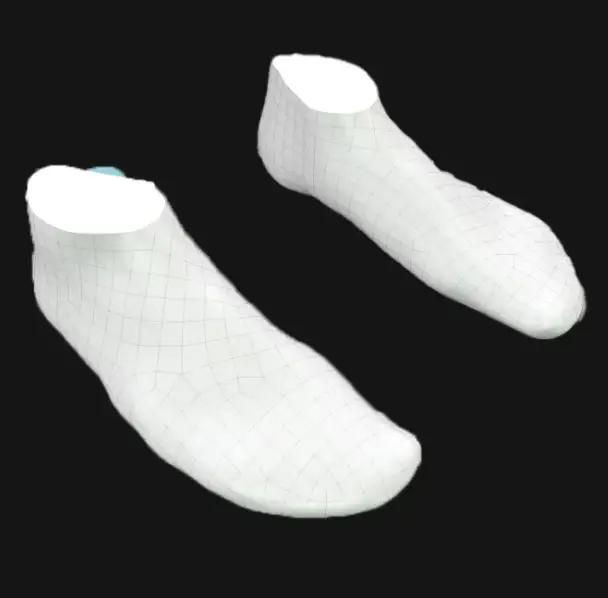
Browser changes become printable geometry
Once the scan is ready, the buyer adjusts a parametric model in ShoeFactory’s browser configurator. Options include sole thickness, width, height, lattice density and text on the strap. Customers have up to 90 days to finish the design. Approving it triggers an export, and Sneakprint emails an archive of print-ready STL files within one to two minutes.
The digital file is reusable: if a pair wears out, its owner can print another without buying the design again. That shifts more than the manufacturing step to the customer. The buyer also needs a printer and a material suitable for a flexible, wearable part, and has to manage the settings and print process well enough to produce a usable sole.
ShoeFactory’s launch information doesn’t specify printer requirements, material recommendations or validated print settings. That gap matters because a slide must flex underfoot and hold its shape in use; a file alone can’t ensure that a chosen printer and filament will produce those results. The platform gives customers control over fit and geometry, but practical success depends on how well those digital choices translate to their particular hardware and material.
A different version of Sneakprint’s fit model
Since May 2023, Sneakprint has sold made-to-order leather sneakers, currently its B2 model at EUR 249. Its MeSize fitting process collects foot data through a smartphone scan or a mailed impression kit. The company then 3D prints footbeds with lattice structures tuned to plantar pressure and pairs them with a last selected from a range of widths.
ShoeFactory retains the scan-to-geometry idea but changes who makes the finished footwear. In the sneaker business, Sneakprint handles production after collecting measurements. With the digital slide, the company supplies the fitting and design system, while the buyer supplies the manufacturing capacity. This reduces Sneakprint’s need to produce and ship each pair, and gives the buyer direct control over when and where to print.
That division of work has a clear trade-off. Buyers with a suitable printer can reproduce the design locally and keep the files for later use. Those without the right equipment, flexible filament or experience tuning a print may find the path from STL to comfortable footwear less straightforward than the browser configurator suggests.
Platform ambitions extend beyond one slide
Sneakprint plans to let independent footwear designers list styles on ShoeFactory. Under the proposed partner program, Sneakprint would convert a designer’s work into a parametric model, connect it to the customer’s foot scan and provide the configurator and checkout. If that model expands, the company’s role could shift from selling its own fitted products to supplying the digital infrastructure behind other designers’ offerings.
A second planned program is aimed at manufacturers of 3D printers, filaments and accessories. Their products could appear in a marketplace serving people already looking for printable footwear files. Material makers could also address the current lack of Easy Slide print guidance by sharing tested settings for flexible soles. Sneakprint has not provided program details publicly; it says further information is available on request.
The company is also developing the Chick Loafer as another ShoeFactory model. Its arrival would test whether the scan-based workflow can support footwear beyond a simple slide, with different shapes and design requirements. For now, the Easy Slide is the only listed product.
Where ShoeFactory sits in home-printed footwear
Other projects split scanning and manufacturing differently. Bambu Lab and SCRY, through the FORMISM studio, began offering customizable 3D-printed shoes in January for home printing. That route also avoids molds, inventory and distribution, but asks users to have a capable desktop printer, experience with flexible TPU and time for long print cycles.
Zellerfeld has connected Volumental foot scans to its 3D-printed shoe workflow, using store and mobile scans to fit shoes to individual customers. In that case, Zellerfeld prints the shoes at its own facilities. Superfeet similarly offers custom 3D-printed insoles based on iPhone scans, with production handled by the company.
Sneakprint brings scan-driven fitting and customer-side production together in one purchase. The defining question is whether customers can reliably print a comfortable, durable slide from the supplied files with the materials and equipment they have. Until the company publishes material guidance and printer settings, that manufacturing handoff remains the most important practical detail to watch.
 Choosing Single, Double, Welded Flap and Repair Keder for Fabrication
 Houston Engineering Team Builds a Welcoming Golf Tournament at East River 9
 MIG Transfer Modes: Choosing Between Short Circuit, Spray and Pulse