Suri Pro 2.0 Refines Toothbrush Performance Through Motor and Damping Changes
Suri and IDC tuned the Pro 2.0’s motor, electronics and internal damping to improve battery life and power while keeping noise at 50 dB.
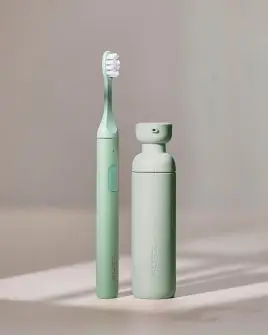
Suri’s Pro 2.0 shows how an established product can gain performance without a new outer design. The toothbrush keeps the original model’s handle and user experience, while engineering work with consultancy IDC focused on motor efficiency, battery life, vibration and noise. The result delivers up to 33,000 sonic vibrations per minute at 50 decibels, according to the team.
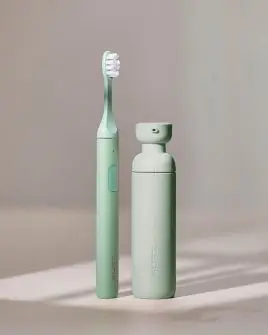
That refinement serves a product built around a broader design aim: making electric brushing practical and appealing while reducing waste from disposable heads and difficult-to-recycle components. Suri’s choices include an aluminium body, PLA brush heads and a free take-back scheme in the UK and US. The Pro 2.0 development also highlights the less visible work behind the experience: testing motors and drive signals, measuring vibration, adjusting internal damping and checking supplier parts.
Keeping the design while improving performance
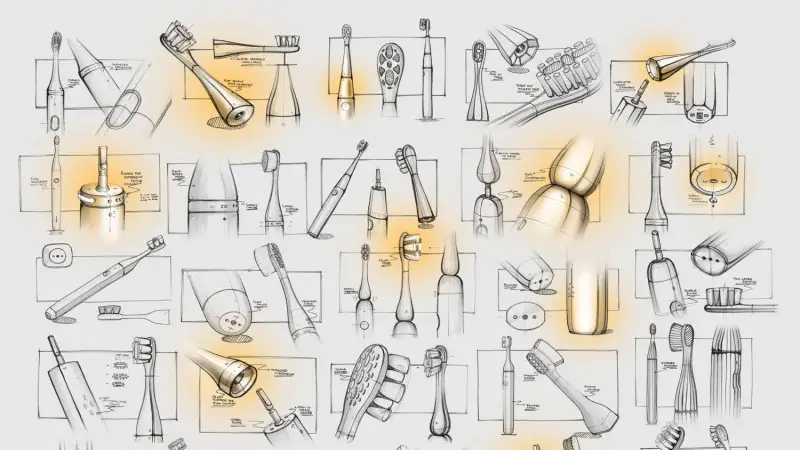
Suri launched its first toothbrush in 2022. For the second generation, the founders, Gyve Safavi and Mark Rushmore, decided to preserve the product’s core industrial design rather than replace a form that customers already liked. The team used feedback from social media and review platforms, including about 20,000 reviews on Trustpilot, to identify which features to carry forward and where improvements were needed.
Suri innovation director Seb Wetherall said the most common word in the feedback was “love.” Customers valued the brushing experience and accessories such as a mirror mount that keeps the brush off the counter. USB-C charging and a travel case with a UVC light for sterilising the head also drew positive responses. That feedback gave the team a stable base for a second-generation product and helped guide its plans to expand in the US without changing the original form.
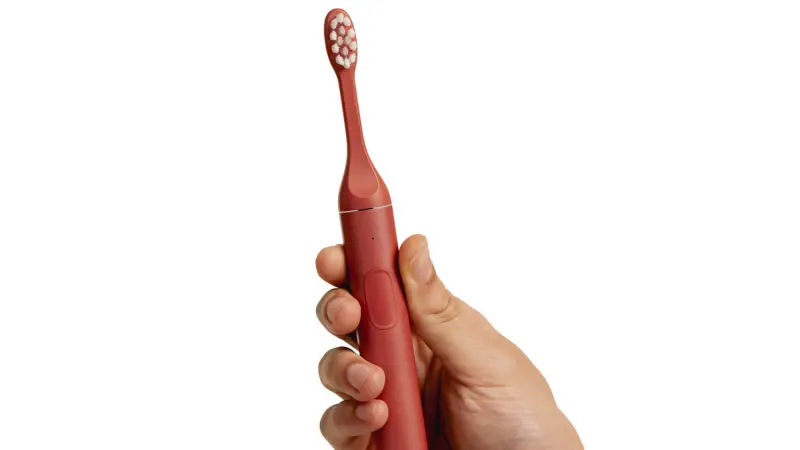
The decision set a clear engineering constraint: improve the product without changing the tooling for its casing. Suri’s body is aluminium, selected for durability, corrosion resistance and recyclability, as well as its light weight and feel in the hand. The material choice also supports a product designed for everyday use near water and toothpaste.
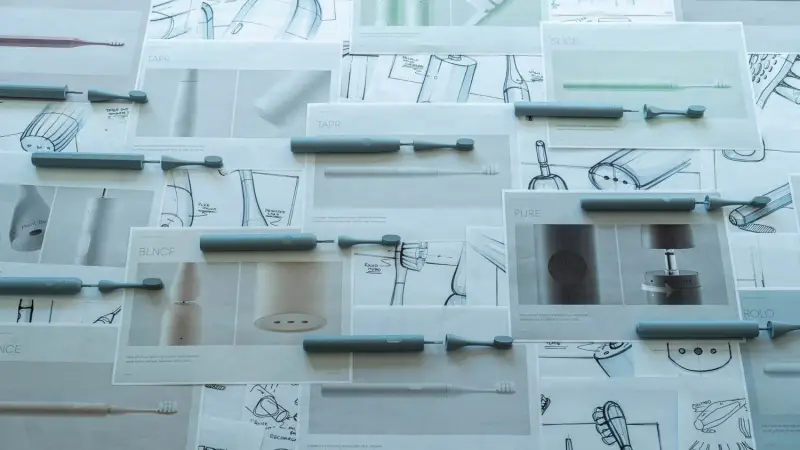
The early concept work used Rhino and KeyShot, with Vizcom helping the team explore handle forms. Since the handle was staying, the next development phase centred on battery life, manufacturing scale and supply-chain readiness. Suri had reached the Engineering Validation Test stage with its production partner in China and prototype production was under way, but the company brought in IDC to refine the technical design before launch.
Finding efficiency in the motor system
IDC worked between its UK base in Datchet, Berkshire, and a 10-person office in Shanghai. That arrangement connected Suri’s UK team with engineers close to the factories and component suppliers. IDC managing director Stephen Knowles said the Pro 2.0 prototypes still had two linked problems: the more powerful motor created too much noise and vibration, and the battery life needed to improve.
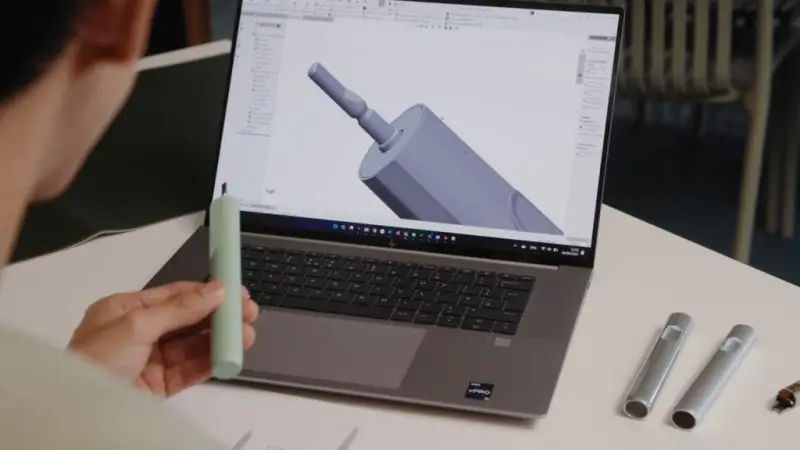
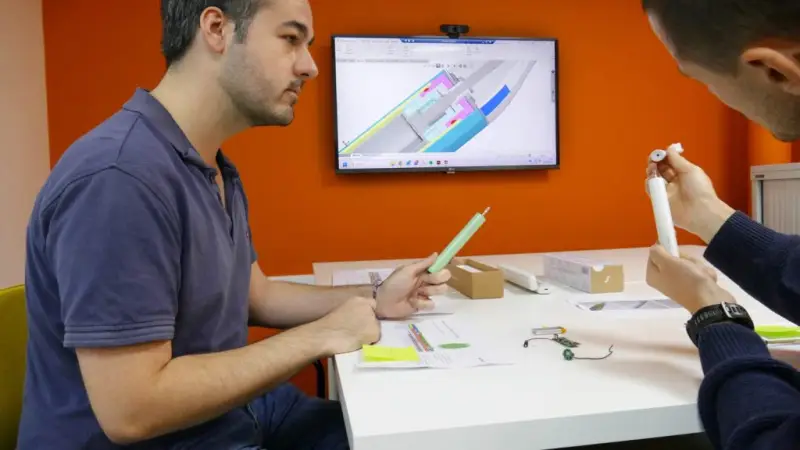
The team investigated the full electromechanical system rather than treating the motor as an isolated part. IDC’s electronics engineers measured the signals sent to the motor, including current and waveforms, and tested multiple motor and battery samples. Their analysis indicated that the factory’s original electronics were driving the toothbrush inefficiently. In parallel, IDC senior design engineer Xiaoya Bao tested motors at supplier sites to compare their response and vibration characteristics.
Supplier visits helped verify whether both standard and customised parts matched the design requirements. Bao could visit several suppliers in a day to inspect electronics and mechanical components, including injection-moulded parts. That local work helped connect the team’s bench measurements with the actual parts and processes available to manufacture the brush.
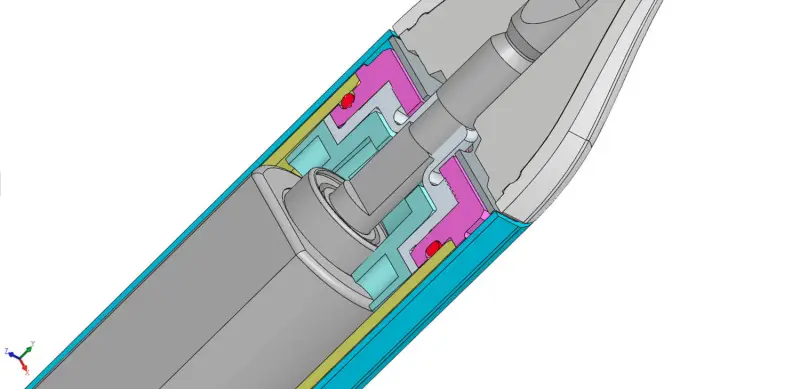
Motor selection alone could not define a good result. The toothbrush needed enough output to feel effective while avoiding harsh vibration in the user’s hand. Noise, balance and perceived power all shaped the experience, so the team had to translate subjective feedback into measurements it could repeat across prototypes.
Turning vibration into something measurable
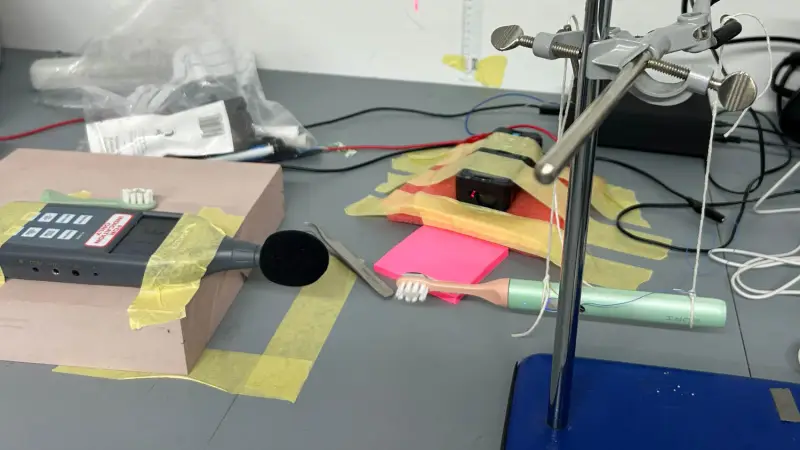
Sound level was one measure: the team used decibel readings to compare motor noise. To visualise small movements at the head, IDC attached a mirror to the back of the toothbrush head and aimed a laser at it. The reflected spot on a wall amplified tiny movements into a visible deflection. Knowles said the technique made it easier to compare the vibration produced by different motors and operating settings.
IDC used Suri’s SolidWorks CAD file to fit the revised electrical and mechanical components into the existing product architecture. Higher motor power also made internal damping important. The structure needed to direct vibration toward the brush head and limit its transfer into the handle, where it could feel uncomfortable. IDC produced mock-ups with in-house stereolithography 3D printing, allowing engineers to compare several physical versions while refining the design.
The reported outcome is up to 33,000 sonic vibrations per minute, with operation at 50 decibels. Suri and IDC describe the brush as both more powerful and quieter, with battery life also among the improvement targets. The figures offer a concrete performance reference, while the development process shows why motor output, drive electronics and mechanical damping have to be tuned together in a handheld device.
Designing for use and end of life
Suri’s sustainability work starts with the waste associated with replaceable brush heads. The company cites around 141 million electric toothbrush heads discarded annually in the UK and about 4 billion worldwide. Nylon, a common head material, can take hundreds of years to break down. Suri uses plant-derived PLA for its heads and offers free recycling through a take-back scheme in the UK and US.
The toothbrush also uses nonpermanent adhesives to support disassembly at end of life, with the possibility of recovering components for recycling, repair or replacement. That approach has to coexist with durability requirements. A toothbrush may be dropped onto a tiled floor and exposed to water, abrasive toothpaste and internal heat. Wetherall said material selection and inspection are therefore central to product reliability, and that the company uses extensive Design Failure Mode and Effects Analysis to examine potential failure points.
Designing for markets beyond the UK adds product requirements to the development process. Wetherall said Suri builds quality management practices into its product framework as it prepares to enter new territories. The team also has to account for different product classifications and manufacturing expectations in each market. Those considerations affect how the architecture and engineering are planned from the outset.
Post-consumer material presents a separate design challenge. Suri intends to increase recycled aluminium in future toothbrush bodies, but recycled brush-head material is harder to present to consumers because of its previous use. The company has begun using recovered material in other products: a soap dish launched in 2026 uses polymer recovered from 18 toothbrush heads.
Extending the system to toothpaste
Suri’s product range also includes a refillable toothpaste system. Its countertop pump body contains 50% recycled plastic, while an airless mechanism is designed to dispense the refill with little toothpaste left behind. The refill cartridge is made from Vivomer, a PHA-based biopolymer developed with Shellworks. Suri describes it as fully biodegradable and suitable for home composting; the material can break down into water and carbon dioxide over six months.
IDC helped develop the pump mechanism, working toward a consistent dispense force and a repeatable pea-sized portion. The team moved between SolidWorks models and 3D-printed prototypes to refine the pump action. As with the toothbrush, small mechanical details shape the daily experience: a dispenser needs to work consistently, while its refill format determines how much material is discarded after use.
Suri’s approach to product imagery reflects the same attention to how a product is experienced. Although both Suri and IDC use KeyShot during design, Suri relies heavily on conventional photography for marketing. Wetherall said the brush needs to be shown in a person’s hand, a pose that generated imagery can struggle to represent naturally, and that photography helps the company communicate product details and build trust with customers.
The Pro 2.0’s development is a useful example of incremental engineering with a firm design constraint. Suri kept the form customers recognised, then worked through the motor, electronics, damping and supplier parts to improve performance. Its next test is whether that balance of usability, service life and material recovery can hold as the product reaches more users and the company expands its range of refillable products.
 Choosing Single, Double, Welded Flap and Repair Keder for Fabrication
 Houston Engineering Team Builds a Welcoming Golf Tournament at East River 9
 MIG Transfer Modes: Choosing Between Short Circuit, Spray and Pulse