MIG Transfer Modes: Choosing Between Short Circuit, Spray and Pulse
Short circuit, spray and pulse transfer trade heat, spatter, penetration and deposition rate differently, shaping which mode suits a weld.

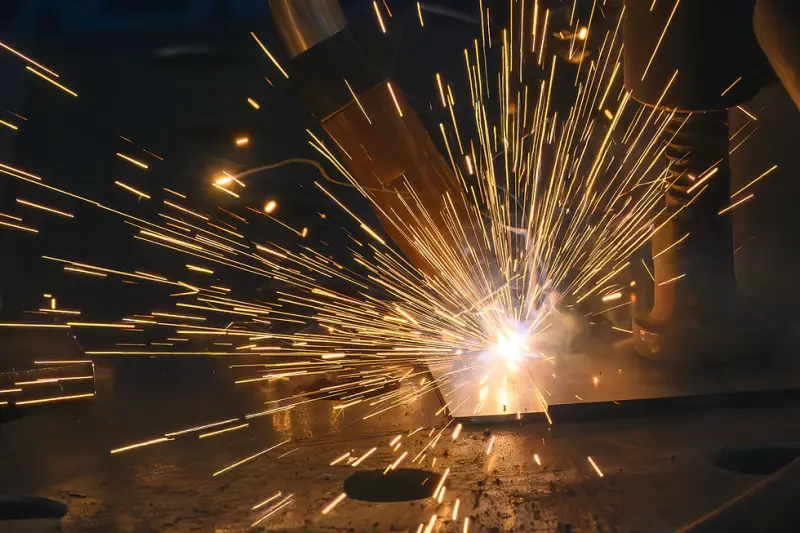
Spatter and burn-through can point to a mismatch between the weld and its metal transfer mode. Short circuit, spray and pulse each deliver wire into the weld pool differently, changing heat input, penetration, deposition rate and positional control. Choosing among them is a process decision alongside wire, gas, joint preparation and machine settings.
The comparisons here are general. Results depend on the equipment, wire, shielding gas, base material, joint preparation and welding procedure. Still, the basic trade-offs help narrow down what to try when a weld is producing too much cleanup, too little penetration or excessive heat.
Short circuit: lower heat, more spatter
In short circuit transfer, the wire repeatedly touches the weld pool, briefly shorting the arc before it reignites. That cycle repeats many times per second and produces a crackling sound, often likened to bacon frying.
Its relatively low heat input makes short circuit a common choice for thin sheet, heat-sensitive parts and root passes. It can reduce burn-through and distortion, and it works in flat, horizontal, vertical and overhead positions. That flexibility is useful when the workpiece can’t be repositioned.
The trade-off is spatter, which can mean more post-weld cleaning where appearance matters. Lower current can also limit penetration on thicker material. Short circuit works with conventional MIG power sources and doesn’t require a particular shielding-gas mixture.
Spray: fast deposition with high heat
Spray transfer uses higher current to carry a continuous stream of fine droplets across the arc. When the settings are right, the arc is stable and produces little spatter, with a steady hiss that can sound like wind moving through leaves.
Good penetration and a high deposition rate make spray useful for thicker material and production work that needs to add weld metal quickly. It’s suited to flat and horizontal positions, where the fluid weld pool is easier to manage.
That fluidity becomes a drawback out of position, and high heat input raises the risk of burn-through and distortion if the workpiece and procedure aren’t suited to it. Spray requires shielding gas with at least 80% argon. An industrial MIG power source can run it with suitable gas and settings.
Pulse: spray-like deposition with more heat control
Pulse, also called pulsed spray or pulse MIG, alternates rapidly between a high peak current and a lower background current. The peak supports fusion; the lower current lets the pool cool between pulses, reducing overall heat input compared with spray.
The mode aims to combine spray-like penetration and deposition with lower spatter and better control of heat. That makes it a candidate for thin material, heat-sensitive parts and vertical or overhead welding, while retaining good penetration and a high deposition rate. Different pulse programs use different current patterns, but share these general advantages.
Pulse requires a power source with pulse capability and shielding gas containing at least 80% argon. Its main limitation is equipment availability: a conventional MIG machine may not have pulse programs.
Match the mode to the defect
For burn-through on thin sheet or distortion on a heat-sensitive part, short circuit or pulse can help by keeping heat input lower or more controlled. For excessive spatter cleanup, spray or pulse may reduce cleanup. If production is slow, their higher deposition rates may help, provided the material, position and process can accommodate them.
At a glance, short circuit has low heat input, high spatter and low deposition; it suits thin material and all positions, though penetration can be limited on thicker stock. Spray brings high heat, low spatter, good penetration and high deposition, but is best kept to flat and horizontal positions and carries a greater burn-through risk on thin material. Pulse offers moderate heat, low spatter, good penetration and high deposition, and can be used across positions and on thin material.
These are tendencies, not guaranteed outcomes. A transfer mode alone won’t correct poor fit-up, unsuitable wire or gas, or settings that don’t match the joint. Treat it as one part of the welding procedure.
What automation changes
A robot can hold travel speed, torch angle and contact tip-to-work distance consistent. That consistency helps isolate whether spatter or other weld problems come from process settings or variation in how the torch is moving. It also makes heat input more predictable: a change in travel speed at a corner or during repositioning can put extra heat into thin sheet, while a robot can maintain a programmed pace across the weld path.
A positioner can turn a part so more joints are presented in flat or horizontal orientations, where spray is easier to control. That may make its high deposition rate practical on more of the work.
Automation doesn’t choose the transfer mode or replace process development. Joint preparation, fixturing, shielding-gas selection and the weld procedure remain part of the job. The useful starting point is to identify the failure mode, consider the material and weld position, then select a mode whose heat and deposition characteristics fit the task.
 Choosing Single, Double, Welded Flap and Repair Keder for Fabrication
 Houston Engineering Team Builds a Welcoming Golf Tournament at East River 9
 CNC Steel Machining: Material Grades, Processes and Quality Factors