EN 9100 Certification Sets Process and Traceability Requirements for Aerospace PCBs
EN 9100 ties aerospace PCB quality to controlled production, supplier oversight, traceability and corrective action across a board’s lifecycle.

Aerospace PCB reliability depends on how consistently a manufacturer controls the work behind each board. EN 9100 gives manufacturers a quality management framework for managing production risks, supplier inputs, configuration changes and records across the product lifecycle. Certification provides evidence that this system has been assessed against aerospace requirements; it does not guarantee that every board is defect-free.
That distinction matters for electronics used in flight control, navigation and monitoring. A board can pass final inspection yet contain a flaw that becomes significant only after long exposure to thermal or mechanical stress. Manufacturing controls therefore need to prevent variation and preserve evidence about what was made, how it was made, and which materials and processes were involved.
Why aerospace boards need repeatable production
Aircraft and other aerospace systems can expose electronic assemblies to thermal shocks, vibration, humidity, pressure changes, electromagnetic interference and, in some applications, radiation. Equipment may also need to remain supportable over a long operational lifetime. Together, these conditions make consistency and documentation part of the engineering requirement, not administrative overhead.
Reliability can be affected by board materials, copper traces, surface finishes, solderability, component mounting and cleanliness. Imperfect solder joints, voids, delamination, contamination and microscopic cracks may not cause an immediate fault, but can become consequential as stress accumulates. The manufacturer needs a controlled process that produces repeatable results and records evidence that the process remained within its requirements.

Fig. 1 TI TIDA-070001 → space-grade power electronics / reliability (source: TI)
Risk control, configuration and traceability
EN 9100 is the European aerospace version of the 9100 family of quality management standards. It builds on ISO 9001 principles and adds requirements for aviation and space organizations. Risk management is a central part of that approach: manufacturers are expected to identify potential problems and take preventive action, rather than waiting for defects to appear in finished boards.
For a PCB producer, that affects material and supplier selection as well as production qualification, inspection, testing and delivery. The standard also addresses product safety, configuration management, prevention of counterfeit parts, special processes and traceability. These controls help customers understand the origin and history of materials and components in a product.
Traceability records may cover board materials, equipment, process steps, operators, inspection results, and any rework or repair. If a defect is found, these records can help narrow an investigation to potentially affected batches or products and locate where a problem began. Without them, the manufacturer may have to examine a much wider production history.
Configuration control matters for the same reason. A customer may specify that a board design, material combination or manufacturing process remain unchanged unless a formal authorization is issued. A seemingly minor change can affect reliability, so the ability to track approved configurations is a practical part of maintaining product consistency.
Quality is established throughout the process
PCB production passes through many operations, including material preparation, imaging, etching, drilling, plating, solder-mask application, surface finishing, assembly and inspection. Each step can introduce variation. EN 9100 encourages manufacturers to establish quality through control of these operations instead of relying mainly on inspection at the end of the line.
That means defining and monitoring process parameters, maintaining and calibrating equipment, and ensuring that employees have the training and competence for their assigned tasks. Inspection remains necessary, but it cannot always reveal whether a process was controlled or whether a hidden defect will emerge later.
Some operations, such as soldering and plating, may be treated as special processes because their results cannot always be fully verified by later visual inspection. They may require qualified procedures, equipment and personnel. The precise controls depend on the process and product requirements; the key point is that manufacturers need documented, repeatable methods for work whose quality is difficult to confirm after completion.
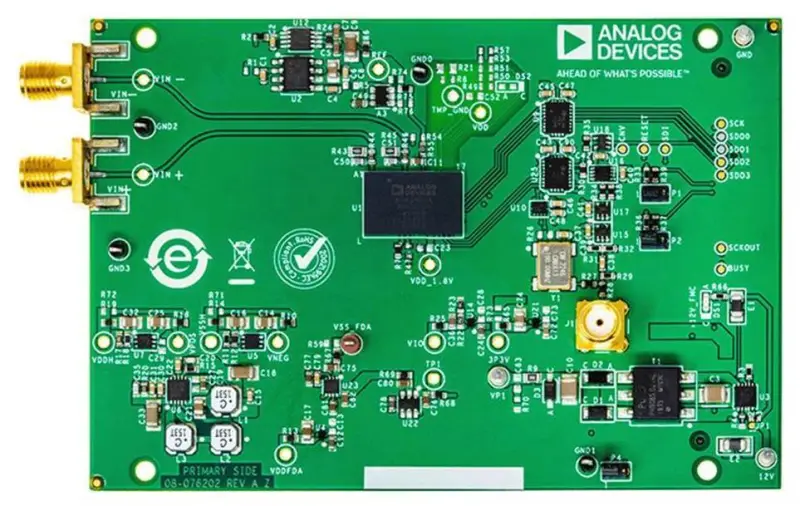
Fig. 2 ADI HMC1087F10 → PCB construction / thermal management / aerospace (source: Analog Devices)
Supplier quality and corrective action
A PCB manufacturer’s controls extend beyond its own factory. Aerospace supply networks can include laminate, copper foil, soldering materials, components, chemicals, surface finishes and specialist manufacturing services. EN 9100 places emphasis on controlling externally provided products and services, making supplier qualification, performance monitoring and incoming inspection part of the quality system.
Those checks help establish whether purchased materials and services meet specified requirements. They also extend traceability across the supply chain, where a material or service problem may affect the finished board even when the manufacturer’s own production steps were followed correctly.
No production system is immune to nonconformities. A soldering flaw, plating issue, dimensional deviation or material anomaly calls for more than a decision to repair or reject affected boards. The manufacturer must contain the issue, investigate its cause and decide whether process changes are needed to prevent recurrence.
That work forms a cycle: identify the problem, establish its cause, apply corrective action, check whether the action worked and use the findings to improve the system. For customers, the ability to learn from production data is part of confidence in a supplier’s ongoing capability.
What certification demonstrates
EN 9100 certification means an organization’s quality management system has been independently assessed against aerospace-specific requirements. It does not certify each PCB or prove that every delivered unit is free of defects. Instead, it offers customers evidence that the manufacturer manages processes, risks, documentation, personnel, suppliers and corrective actions within a structured framework.
Maintaining that framework takes ongoing work: documented procedures, employee training, internal audits, supplier controls, risk assessment and process monitoring. When applied consistently, these practices can reduce manufacturing variation, surface problems earlier and make investigations faster through stronger records. They can also support supplier qualification for programs that require or favor aerospace-specific quality controls.
As aerospace electronics incorporate more demanding board designs, materials and thermal and signal-integrity requirements, the manufacturing process remains part of product performance. EN 9100’s practical contribution is to make that process visible and managed—from purchased inputs and production steps to the records needed to understand a board’s history.
 Choosing Single, Double, Welded Flap and Repair Keder for Fabrication
 Houston Engineering Team Builds a Welcoming Golf Tournament at East River 9
 MIG Transfer Modes: Choosing Between Short Circuit, Spray and Pulse