Choosing Single, Double, Welded Flap and Repair Keder for Fabrication
Keder construction affects load distribution, fabrication methods and rail fit. Compare four types and match each to materials, equipment and application needs.
Keder selection shapes both the finished attachment and the production process. A single flap gives fabricators several welding options; a double flap captures the fabric between two layers and is commonly made with radio frequency (RF) welding when full multi-layer fusion is needed. Welded flap and repair keder address different needs: sewn installation and maintenance, respectively.
These choices concern the construction around the bead. They don’t determine the bead diameter, which must be specified separately to suit the rail or track. For tent and structure fabricators, getting both specifications right helps align the attachment with its loads, materials, installation method and available equipment.
Construction and bead size are separate specifications
Keder type describes how the flap attaches the bead to the finished fabric or panel. The four configurations covered here are single flap, double flap, welded flap and repair keder. Bead size generally refers to the bead’s diameter, which must correspond to the keder rail or track.
Two products can share a bead diameter and still have different flap constructions. Conversely, choosing a double flap doesn’t by itself determine which bead diameter to use. Fabricators need to specify the construction and size independently, then confirm that the complete assembly suits the intended application.
The flap construction also affects how the attachment can be made. A one-sided seam may suit more than one welding method, while a double flap can involve several material layers that must fuse consistently. Material compatibility matters throughout: the fabric, flap material and welding method need to work together. Miller Weldmaster lists weldable industrial fabrics for applications where that compatibility is part of process selection.
Single flap: a one-sided attachment with several process options
Single flap keder has one flap extending from the bead. The flap is placed against the fabric edge and joined by a suitable welding or sewing process. Once attached, the bead slides into a compatible rail or track to form an edge connection.
Because the fabric is attached on one side of the bead, this construction can suit products that don’t need the material captured between opposing flaps. Its relatively straightforward geometry also leaves fabricators with several possible welding methods. Depending on the materials and seam design, single flap keder can be processed with hot air, hot wedge or RF welding.
Hot air directs heated air at the weld interface before pressure forms the seam. Hot wedge places a heated wedge between the material layers, which are then pressed together by rollers. RF welding uses electromagnetic energy to heat compatible materials internally. The method that works best depends on the keder and fabric materials, seam geometry and production requirements; a machine’s suitability for one single flap product shouldn’t be assumed to apply to every material combination.
Typical uses include awnings, canopies, signage, banners, lighter-duty tent components and general fabric panels that need a one-sided attachment. Single flap can also suit applications with moderate tension requirements. Actual seam performance still depends on the materials, weld configuration and other design details.
Double flap: wider load distribution brings a more complex seam
Double flap keder has two flaps that capture the adjoining fabric between them. The attachment engages both sides of the material, spreading force across a wider area than a one-sided flap. That makes this arrangement useful to consider where a fabric panel sees greater tension or structural loads.
Double flap is commonly associated with RF welding when the design calls for full fusion through multiple layers. RF energy heats compatible material internally, which can suit a multi-layer assembly. However, the construction alone doesn’t settle the process choice. Some overlap arrangements may be made with hot air or hot wedge, depending on the material and seam design. A process that works for single flap keder may not produce the same result in a double flap assembly.
Before setting production parameters, fabricators should test the actual keder and fabric combination using the intended seam configuration. That’s especially useful when the design introduces additional layers, since the process must produce a consistent joint through the assembly. For background on the processes, see this overview of RF welding.
Applications can include tent and structure sidewalls, roof panel connections, industrial curtains and partitions, tarpaulins, pool covers and other tensioned fabric products that need wider load distribution. The construction can help spread loads, but it doesn’t establish a rated capacity on its own. Seam performance also depends on bead size, fabric weight, materials and weld configuration.
Welded flap and repair keder address different production needs
“Welded flap” describes how the keder component is made, not necessarily how it’s attached to the finished panel. In this configuration, a PVC flap is pre-welded during keder manufacture. The fabricator can then sew that flap onto the fabric.
This allows a production line that relies on sewing to add a PVC keder attachment without welding the keder directly to the finished panel. Welded flap configurations can suit marine fabrication, awnings, screens and other products where sewing remains part of the established process. The suitable construction still depends on the product, installation and expected loads.
Repair keder is intended for retrofit, service and refurbishment work. It can provide a way to restore a damaged attachment area without replacing an entire fabric panel. The replacement needs to match the original installation as closely as practical, including bead size, material and attachment method. If those details differ, the replacement may not fit the track or behave like the original assembly.
Compare the four types against the finished product
| Keder type | Construction | Typical fabrication route | Example applications |
|---|---|---|---|
| Single flap | One flap extends from one side of the bead | Hot air, hot wedge or RF, depending on material and seam design | Awnings, canopies, signs and banners |
| Double flap | Two flaps capture the fabric between them | RF is commonly used for full multi-layer fusion; other methods depend on the assembly | Tents, structures, curtains and higher-load panels |
| Welded flap | PVC flap is pre-welded, then sewn to the fabric | Sewing during final fabrication | Marine products, screens and awnings |
| Repair | Retrofit attachment selected to suit the existing assembly | Depends on the original construction | Maintenance and refurbishment |
These categories describe common uses rather than fixed performance ratings. The application, materials and seam design determine how a particular assembly performs. In particular, a type label alone doesn’t establish the strength of the finished attachment.
A practical selection sequence for production
1. Define the application and loading
Start with the finished product. A lighter-duty awning attachment may have different needs from a large tent sidewall or a tensioned structure panel. Consider the forces on the attachment, environmental exposure, installation method and expected service conditions. The supporting frame and rail matter too: keder rails are usually made from aluminum or steel, and the material should suit the service environment.
These requirements help narrow the construction choice. Single flap can suit a one-sided attachment, while double flap may be useful where the design calls for a wider attachment area. For a sewn production route, welded flap may fit the workflow; repair keder is intended for service work on an existing installation.
2. Check the process against the construction
Next, match the chosen keder to the equipment and materials on the production line. Hot air and hot wedge equipment may offer options for single flap seams. A double flap assembly requiring full multi-layer fusion may call for RF, provided the materials are compatible. The seam design can change which processes are appropriate.
Confirm the machine setup, tooling and material combination before committing to a production specification. Comparing hot air and RF welding can help clarify process differences, but trials with the actual assembly are needed to establish whether the proposed seam works for the product.
3. Size the bead for the rail independently
Once the flap construction is selected, identify the bead diameter that fits the intended rail or track. As a sizing note, the rail opening is typically about 60–70% of the rope diameter. With the right fit, the keder should slide into the rail channel with hand pressure.
Treat that proportion as a guide from the product specifications, not as a substitute for checking the actual rail and bead together. Type and size solve separate design questions: the type defines the attachment construction, while the diameter must suit the track. Fabric weight and thickness also enter process development because they affect the material stack at the seam.
4. Fit the equipment to the production work
Production volume, seam variety, materials and desired automation all influence equipment selection. A line that makes keder frequently may have different requirements from one that needs keder alongside several other fabric-finishing operations.
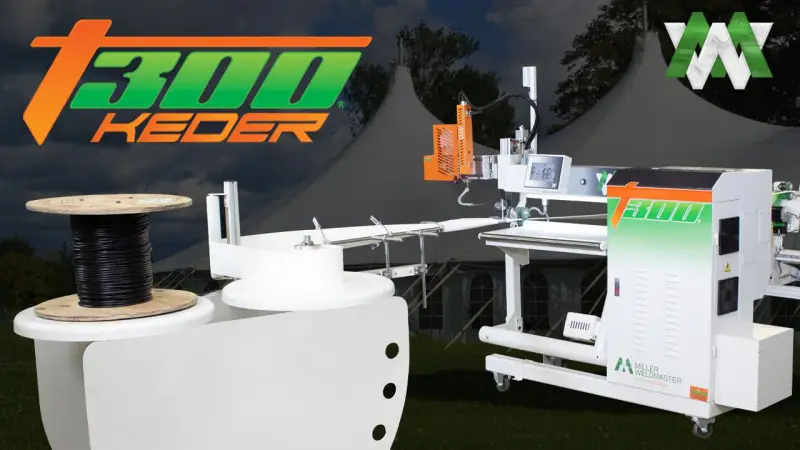
Miller Weldmaster describes the T300 Extreme Keder system as designed around keder production, while the M100 keder welder offers additional fabric-finishing capabilities for work involving multiple seam types. Those product descriptions are starting points for comparing equipment. The actual choice should follow the keder construction, materials, weld requirements and production goals.
Selection errors to catch before production
One common misstep is specifying double flap for its load distribution without checking whether the production equipment can make the required multi-layer seam. A setup used for single flap may not be configured for the layers and geometry of a double flap assembly. Confirm process compatibility, tooling and materials early.
Another is treating bead size as a description of the flap type. A bead needs to fit its rail, while the flap construction needs to suit the attachment and fabrication method. Specify both, and verify the rail connection as part of the finished design.
Repair work brings a separate risk: assuming a replacement component matches the existing installation. Differences in bead diameter, material or attachment construction can complicate the fit and affect the finished panel. Recording these details when a product is built makes later service easier.
Test the assembly before fixing the process
Keder production spans tent, awning, marine, signage, structure and industrial fabric applications, so one process choice won’t suit every combination. Miller Weldmaster offers hot air, hot wedge and RF systems for industrial fabric work; the relevant method depends on the construction and material, as well as the production line.
Fabricators can review keder manufacturing steps and equipment for awning, shade and marine applications when evaluating a process. For a new product, increased production or a different attachment design, trials with the actual materials and seam configuration provide a practical basis for setting up production.
The key decision is the complete combination: flap construction, bead size, rail compatibility, materials and joining method. Checking those elements together keeps the specification tied to the finished application and gives the production team a clearer route to a repeatable seam.
 Houston Engineering Team Builds a Welcoming Golf Tournament at East River 9
 MIG Transfer Modes: Choosing Between Short Circuit, Spray and Pulse
 CNC Steel Machining: Material Grades, Processes and Quality Factors