RIG-TARS Pairs an ESP32-S3 With Three Serial Servos for Desktop Robotics
LuwuDynamics’ US$99 RIG-TARS kit combines three UART servos, an IMU, display and networked voice features; buyers 3D-print the enclosure.
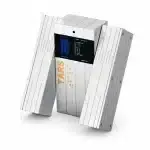
RIG-TARS puts a small articulated robot around an ESP32-S3, with three serial servos handling movement and a six-axis sensor tracking orientation. The US$99 kit from LuwuDynamics is aimed at desktop use and arrives without an enclosure: users need to 3D-print that part themselves. Its mix of motion control, a display and voice interaction makes it a compact platform for exploring embedded robotics, with the printed structure and firmware both part of the project.

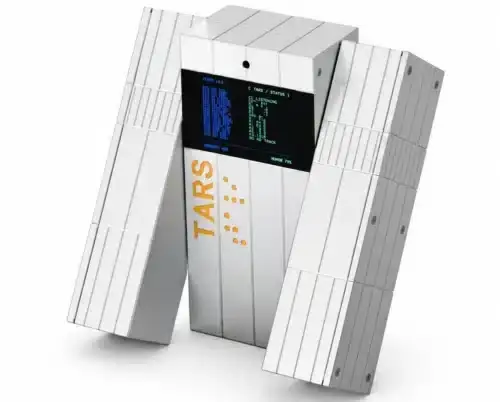
Three servos drive the articulated body
The robot uses a three-column articulated body inspired by TARS from Interstellar. Rather than rolling on wheels, it changes posture and orientation through three serial servos controlled over UART. That arrangement makes the mechanism itself central to how the robot moves: the body’s configuration changes as the servos actuate, while the design offers several distinct forms to explore.

A QMI8658C six-axis IMU records motion and orientation. In practical terms, that gives the control system sensor data about how the module is positioned and moving, complementing the actuators’ mechanical action. The listed hardware does not specify servo torque, travel, speed or the robot’s overall dimensions, so those details will matter to builders assessing payload, motion range or fit with a particular printed enclosure.

The kit is offered in four configurations: TARS, Puppy, Hover and ARM. These names indicate different intended arrangements within the same platform, though the available description does not set out each configuration’s exact geometry or capabilities. The ability to change form gives the project room for mechanical experimentation, but the practical result will depend on the supplied design files and the enclosure a builder produces.

Display and audio connect the robot to its firmware
A 2.4-inch colour TFT provides a local readout at 320×240 pixels, using an ST7789V2 controller. It can show battery voltage, module orientation, tasks and process logs. That combination is useful when working with a small robot because it puts operating information on the device, where a builder can inspect status during configuration without relying solely on a separate interface.
Audio input and output come through a microphone and speaker, with audio processing handled over I2S. The ESP32-S3 supplies Wi-Fi and Bluetooth Low Energy connectivity. Firmware supports optional GC0308 or OV2640 cameras, according to the project description; these are add-on options rather than components identified as included in the US$99 kit.

RIG-Omni, the robot’s firmware platform, is written in C++. Its voice features combine on-device wake-word detection with speech recognition and generation over a network connection. That division means the wake-word function runs locally, while the described recognition and response functions depend on network services and cloud-hosted large language models. The robot’s connected interaction therefore depends on access to those services; the project description does not specify a particular provider or detail how the service is configured.

Firmware and mechanical files are available online
The firmware supports the Model Context Protocol (MCP), which the project describes as enabling voice control for actions such as movement, calibration and status checks. That links conversational input to robot functions, while the physical motion still depends on the servos and the body configuration. For developers, this makes RIG-TARS a combination of an embedded control project and a network-connected interface experiment.
LuwuDynamics provides the RIG-Omni firmware, mechanical design files and documentation through its GitHub project. The project README identifies Apache License 2.0, but anyone planning to modify or reuse the work commercially should check the repository’s license file to confirm the applicable terms.
At US$99, the kit’s listed price covers the components but leaves enclosure printing to the buyer. The design’s appeal will hinge on whether the available files, servo behavior and firmware provide enough room for a builder’s intended experiments. Before choosing it for a specific build, check the project documentation for the configuration details and hardware requirements that determine how the printed body and optional camera fit into the system.
 Choosing Single, Double, Welded Flap and Repair Keder for Fabrication
 Houston Engineering Team Builds a Welcoming Golf Tournament at East River 9
 MIG Transfer Modes: Choosing Between Short Circuit, Spray and Pulse