TI India’s 40-Year Engineering Hub: From Chip Design to Complete Products
TI India engineers contribute across product development, from microcontrollers and edge AI to system designs for energy, healthcare and mobility.

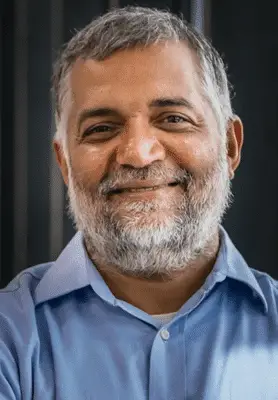
India’s role in semiconductor engineering is expanding beyond chip design toward complete products and systems. That is the opportunity Texas Instruments India managing director and president Santhosh Kumar sees as the company marks 40 years of operations in the country. Speaking at electronica India 2026, he described an engineering hub whose teams contribute across analogue and embedded product development, and a broader ecosystem that could turn locally designed technology into products for customers worldwide.

The shift matters because a semiconductor’s value depends on the system it enables. Kumar’s account connects TI India’s engineering work to applications ranging from two-wheelers and medical equipment to energy systems, appliances and electric vehicles. His emphasis is on solving system-level problems with customers, then determining which chips, reference designs and software are needed to address them.
From local engineering to global product work
TI has built its India operations through sustained investment in engineering talent, design capabilities and customer engagement, Kumar said. The company has close to 80,000 products, and its India teams contribute to development across analogue and embedded technologies. Their work spans the product cycle rather than stopping at an initial design task.

That makes India both a market and a source of engineering work with global relevance. Kumar cited the MSPM0C1104, described as the world’s smallest microcontroller, C2000 real-time microcontrollers and TI’s TinyEngine neural processing unit as examples of products to which TI India engineers have contributed. He did not specify which stages or teams were responsible for each product, but said India-originated engineering has played a part in multiple innovations.
For engineers developing embedded products, the wider point is the range of problems these components can serve. Electronics are becoming more important in two-wheelers, including charging systems and control functions. TI technologies also feature in applications across smart energy, electric vehicles, appliances and the power grid.
Processing closer to the sensor
Medical ultrasound illustrates how system architecture can change when more computation moves into the instrument. An ultrasound probe may contain hundreds of channels that transmit and receive signals, process the resulting data and form an image. Kumar said TI has worked on solutions that perform much of this processing inside the probe, reducing reliance on a connected device.
The engineering challenge is not simply to add compute. Designers must decide how much signal processing to place near the sensor, what the probe can support, and how the system should communicate with other equipment. Kumar’s example points to a general design direction: integrate more capability at the point where data is generated when the application benefits from local processing.

Power systems present another system-level opportunity. As the grid incorporates more solar generation, electronics can manage energy conversion and storage, coordinate consumption in homes, factories and offices, and allow energy to flow back into the system when needed. The semiconductor work sits within a larger chain of sensing, conversion, control and power management.
Edge AI as an embedded design choice
Kumar described three areas where TI uses artificial intelligence: processing at the edge, improving products and operations, and supporting factory manufacturing. For embedded designers, edge AI is the most direct product consideration. TI offers devices with digital signal processors, processors and AI engines that can bring computation closer to cameras, radar, microphones and other data sources.
Local inference can shorten the path between sensing and action. Sending data to a remote server introduces communication time and depends on connectivity; processing locally can support decisions in real time. It can also reduce the need to transmit all raw data, though Kumar did not quantify power, bandwidth or performance gains for specific devices.
The examples range from speech and sensing equipment to a washing machine that needs to identify its load. In each case, the design question is where a decision must be made and what compute the product can accommodate. Edge processing is useful when the product needs a timely response or should operate without sending every input to the cloud.
AI also has an operational role at TI, Kumar said. The company uses it in supply-chain operations to help improve delivery capability, and combines AI with automation in its factories. The same broad toolset therefore appears both inside products and in the processes used to build and supply them.
Designing with customers from the system outward
Kumar framed TI’s approach as engineers working with engineers. Customer engagement begins with what a system needs to accomplish, followed by joint work to develop a suitable solution. That can mean a semiconductor product, a reference design or a system-level contribution that helps a customer build a finished product.

He pointed to TI’s collaboration with the Indian Space Research Organization on Chandrayaan-3, Mangalyaan and the NASA-ISRO Synthetic Aperture Radar mission as examples of engineering support for technically demanding work. The broader method applies across sectors: understand the application constraints first, then work backward to the electronics and architecture required.
That approach also shapes what Kumar calls design-led innovation. Product development involves design, manufacturing, sales and support, but design is where teams identify the customer’s underlying problem and decide what will deliver value. A two-wheeler’s electronics and an ultrasound probe may look like very different assignments; both require engineers to reason from system requirements toward components and implementation.

Talent and the path to products
TI recruits from campuses and runs its Women in Semiconductors and Hardware programme to encourage more women students to pursue semiconductor careers. Kumar said young engineers bring curiosity and new perspectives, while experienced engineers contribute knowledge built through complex problem-solving. He stressed that semiconductor work requires continuous learning, supported by mentorship and opportunities to apply technical knowledge.
That talent pipeline is one part of the larger challenge Kumar identifies for India: connect chip design with deployment in real products. Designing a semiconductor is only one step. The chip must be combined with software and system engineering to address a practical need, such as measuring a field’s water requirements, improving air quality, increasing solar power efficiency or extending a two-wheeler’s battery life.
For that transition, India needs more electronic system designers able to develop reference designs, experiment and optimise. Kumar singled out gallium nitride power solutions as one area where system-level design could open new applications. His argument is that local engineers need room to work across the boundary between component and end product, where many integration choices determine whether a design meets its intended use.
Opportunity across energy and mobility
Looking toward the next decade, Kumar sees opportunities in appliances, smarter grids, smart power and electric mobility. Electrification of two-wheelers, in particular, increases the need for electronics in sensing, processing and power management. TI’s broad product range makes it difficult, he said, to pick a single defining application.
The practical takeaway is that India’s semiconductor opportunity depends on linking engineering talent to application development. TI’s 40-year presence has grown into work across product development, customer collaboration and manufacturing. The next stage, in Kumar’s view, will turn more of that capability into complete products designed in India for use in India and elsewhere.
 Choosing Single, Double, Welded Flap and Repair Keder for Fabrication
 Houston Engineering Team Builds a Welcoming Golf Tournament at East River 9
 MIG Transfer Modes: Choosing Between Short Circuit, Spray and Pulse