MassRobotics Uses RoboBusiness 2026 to Address Startup Pilots, Funding and Industry Collaboration
MassRobotics’ RoboBusiness sessions covered startup fundamentals, corporate pilot programs and mentorship, while member companies demonstrated products on the show floor.
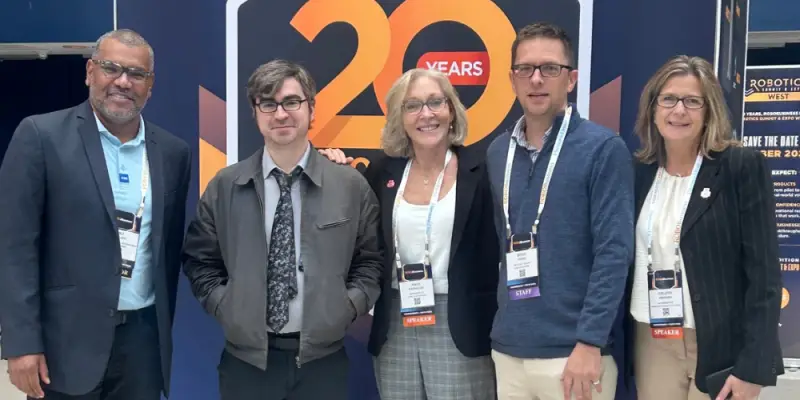
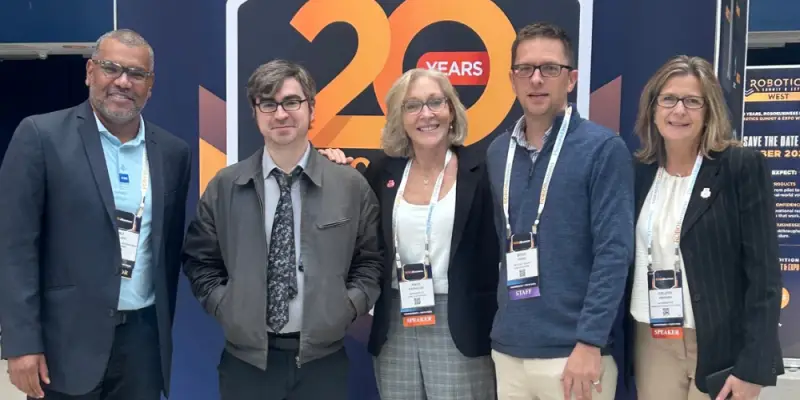
For robotics startups, technical performance is only part of the work. Founders also have to protect intellectual property, fund development, structure customer agreements and turn early trials into repeatable business. Those issues shaped MassRobotics’ program at RoboBusiness 2026, held October 20–21 in Santa Clara for the conference’s 20th edition.
MassRobotics served as the event’s strategic partner and ran a two-part Robotics Startup Bootcamp, alongside a Women in Robotics Luncheon. The sessions brought together startup and enterprise perspectives on the practical decisions that shape a young robotics company’s path from prototype to commercial deployment. The conference was presented by Arrowfly.
Startup basics that are easier to address early
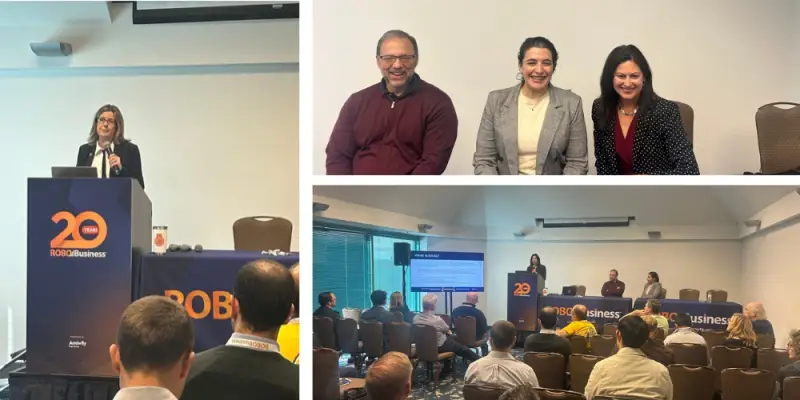
The first bootcamp session focused on company fundamentals. Colleen Anderson, MassRobotics’ Director of Community and Events, led the discussion with John Lanza, Jennifer Audeh and Brooke Fritz, a Tech Transaction Partner at Foley Hoag. Their conversation covered intellectual property and trademark considerations, startup funding, and agreements for Robotics-as-a-Service (RaaS).
These topics connect directly to how a robotics product gets built and sold. Intellectual property decisions can affect what a startup can protect and how it works with other companies. Funding choices influence how long a team can develop and test a system before revenue arrives. RaaS agreements and other contracts define what customers receive and the responsibilities each side accepts.
For founders, the value of covering those questions early is practical: initial decisions can shape later customer relationships and company operations. The bootcamp presented the subjects as common challenges for early-stage firms, with guidance from people experienced in legal and commercial transactions.
Turning a pilot into a working relationship
The second session examined collaboration between startups and larger companies. Joyce Sidopoulos, MassRobotics’ Chief of Operations, moderated a discussion with Ben Waters, CEO and co-founder of WiBotic, and Colm Prendergast, Senior Director and Head of the Emerging Tech Hub at Analog Devices.
The speakers addressed both sides of a pilot or proof of concept (POC). Startups need to secure a trial, agree on its structure and carry it through successfully. Enterprise teams, meanwhile, assess potential suppliers, bring them into their processes and work with them during the engagement. A pilot can open a route to broader adoption, but the two organizations may have different timelines, resources and ways of making decisions.
That gap makes the details of collaboration matter. A startup has to understand what the enterprise needs to evaluate, while the larger organization has to work with a company that may not have the staffing or established processes of a mature supplier. The session focused on practices that can help both groups work through those differences and give a pilot a clearer path toward a lasting relationship.
Mentorship and representation in robotics
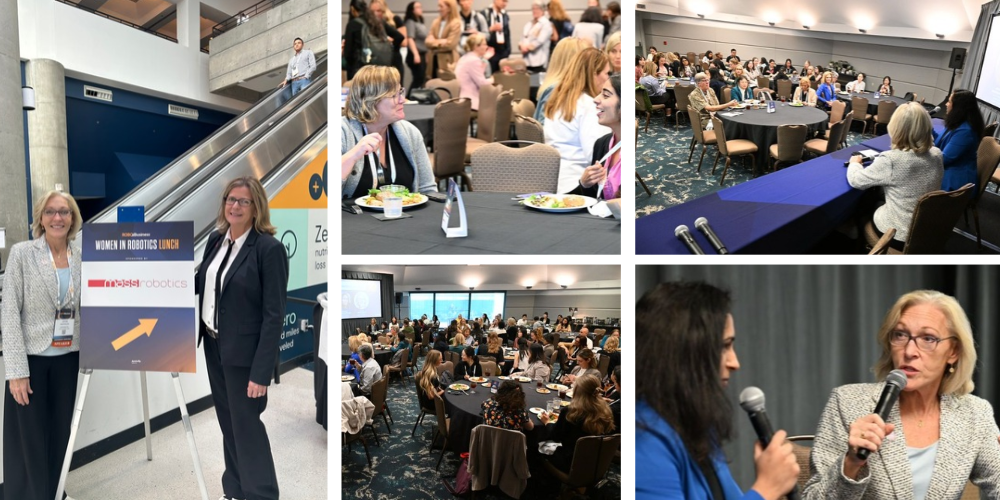
MassRobotics also sponsored the Women in Robotics Luncheon, an hour for robotics professionals to meet and talk about mentorship and careers. The featured fireside chat paired Sidopoulos with Bhavana Chandrashekhar, Senior Manager of Applied Science at Amazon Robotics. Their discussion was part of a gathering intended to help attendees build connections and support greater representation of women in robotics leadership.
The luncheon added a people-focused element to a program otherwise centered on company formation and commercial partnerships. For founders and engineers, professional networks can be a place to exchange experience and find mentors as teams and careers develop.
Startups and suppliers on the show floor
MassRobotics community members were also visible among the exhibitors. Sponsors Harmonic Drive, Novanta and Advanced Motion Controls had booths. Haply, a MassRobotics resident, demonstrated its technology at a booth, while Contactile, an Australian resident through ARM Hub, took part in the startup pavilion.
That mix put emerging companies and established suppliers in the same event setting. For a startup, exhibiting can make its technology easier for potential customers and collaborators to assess directly. For visitors, the floor offers a chance to compare what newer companies are developing with components and systems from established providers.
The conference’s 20th edition brought together technical, commercial and community concerns that all affect robotics companies. MassRobotics’ sessions made the business mechanics explicit: protect and finance the work, set clear terms for trials, and account for how an enterprise partner evaluates and adopts technology. For founders planning their next customer engagement, those are concrete issues to carry from the conference back into development and deployment discussions.
More event information is available in the RoboBusiness agenda.

 Choosing Single, Double, Welded Flap and Repair Keder for Fabrication
 Houston Engineering Team Builds a Welcoming Golf Tournament at East River 9
 MIG Transfer Modes: Choosing Between Short Circuit, Spray and Pulse