MassRobotics Builds a Shared Launchpad for Robotics Startups and Physical AI
MassRobotics gives robotics startups shared labs, programs and industry connections; its residents have raised nearly $3 billion and created over 1,500 jobs.

Robotics startups need more than engineering talent to reach the market. They also need space to build hardware, access to equipment, industry relationships and a path to funding. MassRobotics was created to bring those resources together in one independent nonprofit hub. Co-founder and Chief of Operations Joyce Sidopoulos says the organization has supported more than 250 robotics startups, while resident companies have collectively raised close to $3 billion in venture funding and created more than 1,500 jobs.
A hub built around shared resources
The idea took shape through the Robotics Cluster at the Mass Technology Leadership Council, where Sidopoulos joined as cluster manager in 2012. Working alongside companies, researchers and educators across Massachusetts, she and Tom Ryden, now MassRobotics’ executive director, saw a strong robotics community without a central place for startups, industry, investors and academia to connect.
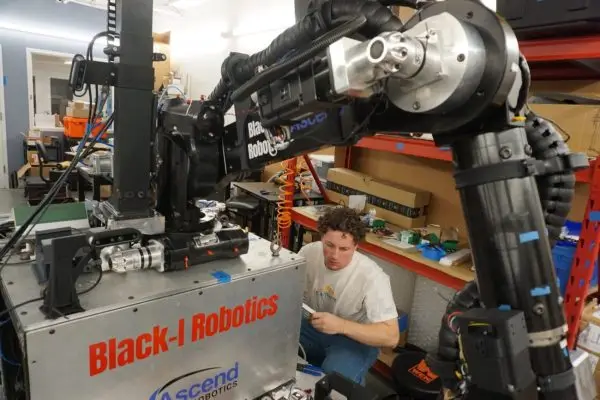
That gap has particular weight in robotics. Hardware development requires physical space and equipment, and those needs can be expensive for early-stage companies to meet on their own. Sidopoulos says the founding concept was to let startups share tools and resources while building relationships across the field. MassRobotics was established as a nonprofit in 2015; the organization launched in 2017 and later secured a physical headquarters with support from the City of Boston.

For Sidopoulos, securing that early backing was a defining moment. Presenting the hub’s vision to then-Mayor Marty Walsh and gaining support for a permanent home made the project tangible. She also points to the progress of companies that have moved from early concepts to raising substantial funding and creating jobs.
Support without taking equity
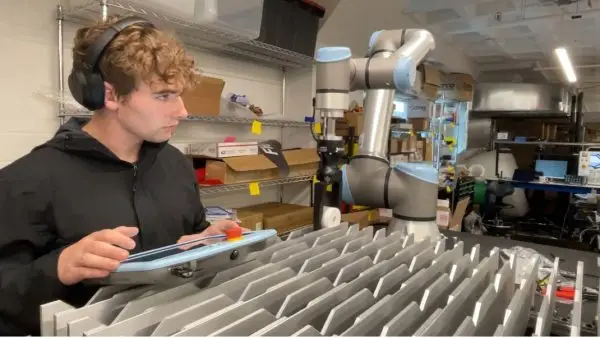
MassRobotics isn’t a product company or a conventional investor. It offers flexible workspace and laboratories rented monthly, alongside startup accelerators, workforce programs, fellowships, corporate partnerships and opportunities for global collaboration. The aim is to help founders connect technical development with commercialization and adoption.
The organization says it does not fund resident startups or take equity from companies sharing its space. That structure supports its role as a neutral platform serving founders, corporations, academia and other participants. Sidopoulos describes the approach as founder-first: startups get practical support and connections while the nonprofit remains available across the wider ecosystem.
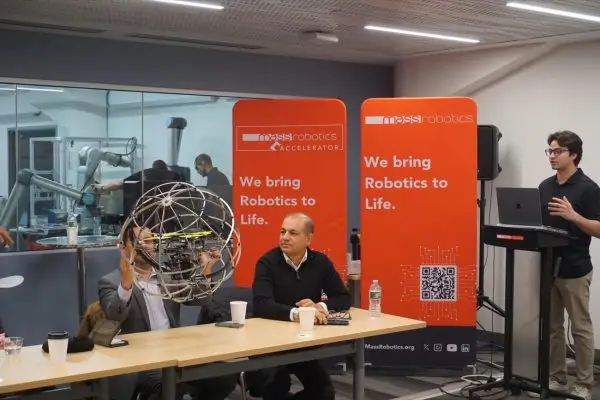
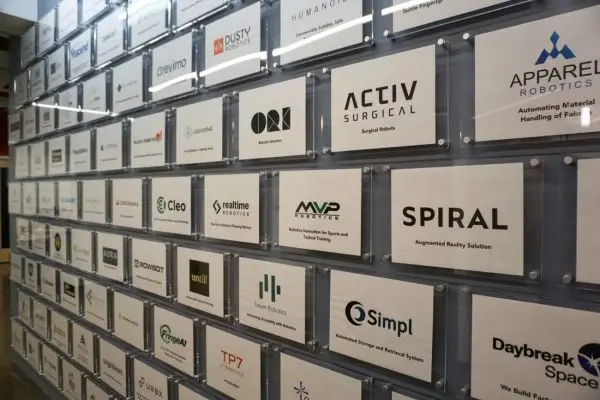
That neutrality also addresses a persistent problem in robotics: fragmentation across industries, technologies and organizations. MassRobotics brings groups together, including competitors, around shared industry growth. In Sidopoulos’ account, the value comes from collaboration and access to partners, not from controlling a particular technology or market.
From core robotics to physical AI
MassRobotics doesn’t develop a single in-house robotics system. Instead, the technologies emerging from its community have shifted over time. Early activity focused on core robotic systems and hardware; the current mix includes physical AI, autonomous systems and advanced sensing. The hub’s programs and partnerships have expanded with those needs, with the goal of helping companies move emerging technologies toward commercial use.
The startups’ results offer one measure of the model’s reach. Sidopoulos says companies have gained mentorship, partnerships and visibility through their involvement, helping some build commercial traction, secure funding and grow their businesses. Residents have expanded internationally, won contracts with large corporations and, in some cases, been acquired. MassRobotics itself is funded through corporate partnerships, sponsorships and program funding.
The hub serves companies across manufacturing, healthcare, logistics, mobility, construction, climate technology, marine industries and agriculture, among other fields. It doesn’t target one addressable market; its remit is the broader global robotics industry. Sidopoulos sees physical AI and automation increasing the opportunity across these sectors, though the practical path to adoption will differ from one industry to another.
Growing the ecosystem
MassRobotics has added accelerators, global partnerships and public events to its work. Among those events are the Robot Block Party and the annual Women in Robotics Medal. Sidopoulos also describes the organization as the world’s largest independent robotics hub, and says it has become known internationally for helping speed the development, commercialization and adoption of robotics.
Her own route to the role spans engineering and business development. She began her career as a sonar signal processing engineer, then worked in business development supporting defense contractors at Hanscom AFB and MIT Lincoln Laboratory before leading robotics and innovation programs at the Massachusetts Technology Leadership Council. At MassRobotics, she says, the through line has been connecting people and turning broad ambitions into programs and partnerships that help startups grow.
The next priorities are to extend the hub’s global reach, strengthen the robotics workforce and support physical AI development and commercialization. The central challenge remains familiar: translate technical progress into systems that can work in real settings. For startups building physical products, shared facilities and trusted industry connections can help bridge that distance, while a neutral community gives companies and researchers room to work across organizational boundaries.
 Choosing Single, Double, Welded Flap and Repair Keder for Fabrication
 Houston Engineering Team Builds a Welcoming Golf Tournament at East River 9
 MIG Transfer Modes: Choosing Between Short Circuit, Spray and Pulse