Stainless Steel CNC Part Polishing: Surface Finish, Cleanability and Tolerances
Polishing can improve cleanability, contact and corrosion performance, but material removal and finish requirements need control.
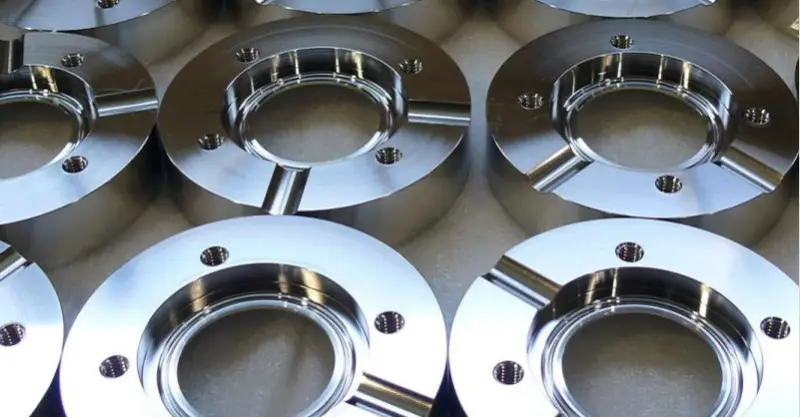
Polishing a stainless steel CNC part can change how it performs, not just how it looks. A smoother, more controlled surface may be easier to clean, support more consistent contact or sealing, and reduce places where residues collect. The right result depends on the part’s function, material grade, geometry and dimensional limits.
Milling, turning, drilling and grinding leave characteristic marks and microscopic surface irregularities. Whether those features matter depends on the application: a hidden component with modest finish requirements may need no extra work, while a fluid-contact surface, sliding interface or visible product face may need a specified finish. Polishing is a finishing operation that removes material, so it must be planned alongside machining and inspection.
What polishing changes
Mechanical polishing uses abrasives to remove surface irregularities. A process may start with coarser grinding to reduce machining marks and proceed through finer abrasives to reach the required surface condition. The result depends on the starting surface, abrasive sequence, process control and part geometry.
Electropolishing removes material through an electrochemical process. Microscopic high points are generally removed more quickly than recessed areas, which can leave a smoother, more uniform surface. It can also improve surface cleanliness. These processes are distinct: mechanical polishing works through physical abrasion, while electropolishing acts electrochemically.
Neither method guarantees a particular finish on every part. Stainless steel grade, initial roughness, shape, access to the surface and process conditions all affect what can be achieved. For precision work, define the required surface condition in the drawing or technical specification rather than relying on a general instruction to polish.
Surface roughness, cleaning and contamination
A polished surface can have lower roughness than a machined surface. That matters when a component has a specified Ra value or another surface-finish requirement. The target should reflect the part’s function: choosing an unnecessarily fine finish can add processing time and cost without a useful performance gain. Polishing also should not be treated as a universal fix for meeting any roughness target; the achievable result depends on both the part and the process.
Surface texture affects how easily residue and particles can be removed. Microscopic valleys and irregularities can provide places for contaminants to collect, while a smoother finish is generally easier to clean. This can make polishing relevant to food-processing, pharmaceutical, laboratory and medical-related equipment, where cleanliness is part of the design and maintenance requirements.
A smooth finish alone does not make equipment hygienic. Material selection, component design, surface condition, cleaning procedures and the operating environment all contribute. Polishing is one element of that system, and its value depends on the conditions the part will encounter.
The same distinction applies to contamination retention. Reducing irregularities can reduce opportunities for foreign particles or residues to remain on a surface. Equipment designers may therefore set controlled finish requirements for parts that need contamination control. The finish must still be considered together with suitable materials and cleaning practices.
Corrosion performance and surface treatments
Stainless steel’s corrosion resistance is associated with a chromium-rich passive oxide film. Machining, grinding and handling can leave surface contaminants or embedded particles. Finishing can remove some surface contamination and improve the condition of the metal surface; electropolishing may be considered where smoothness and cleanliness are both important.
Polishing and passivation have different purposes. Polishing changes the physical surface through material removal. Passivation is a chemical treatment intended to promote or restore a more stable passive surface by removing free iron and other contaminants under controlled conditions. Depending on the part and its requirements, these processes may be used separately or in combination. Polishing by itself should not be taken as proof that a part is corrosion-proof.
Friction, wear and sealing interfaces
Surface finish influences how contacting parts behave. On a sliding interface, pronounced irregularities can increase mechanical interaction. Lower roughness may help produce more consistent sliding, which can matter for shafts, sleeves, guides and other moving components.
That does not mean a smoother surface always has lower friction or wear. Results depend on the materials in contact, their hardness, lubrication, load, contact pressure, speed and temperature. The finish should be selected against the actual operating conditions rather than treated as an independent performance upgrade.
Mating faces and sealing surfaces also need controlled finish. Excessive irregularities can make contact less consistent, while a suitable finish may support a more uniform interface when paired with an appropriate seal design. Valve parts, fittings, fluid-handling components and precision assemblies may therefore need a finish specified as a functional requirement. The target depends on the seal, fluid, pressure, dimensional tolerance and design requirements.
Appearance and machining defects
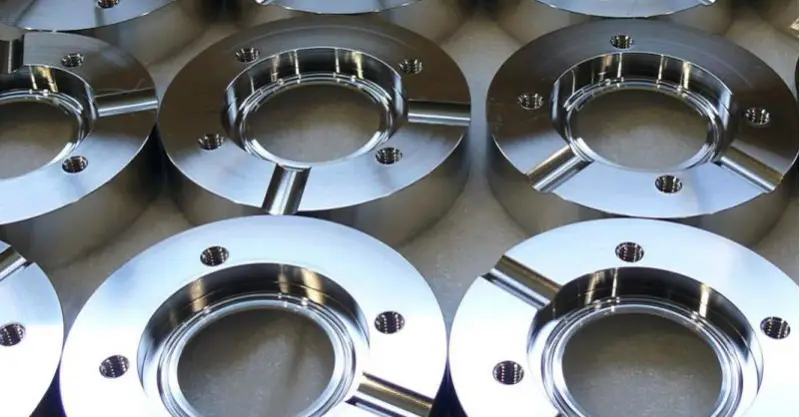
Polishing can reduce some visible tool marks, scratches and minor surface imperfections, giving a component a more uniform appearance. The finish may be bright or mirror-like, depending on the process. Appearance can matter on consumer products, architectural hardware, laboratory equipment and other parts with exposed surfaces.
It is a finishing step, not a way to repair major machining problems. Deep scratches, chatter, deformation, dimensional errors and incorrectly machined features generally need correction in the manufacturing process. Trying to polish them away can remove too much material or leave the part outside its dimensional limits.
“Polished stainless steel” may not define a repeatable result. Where appearance matters, specify the surface roughness, polishing level or a reference sample. A clear requirement helps align the expected visual finish with the production process.
Protecting dimensions during finishing
Polishing removes material, even when the amount is small compared with rough machining. How much comes off depends on the starting surface, method, processing time and finish target. That removal can affect critical diameters, flatness, thickness and mating dimensions.
For tight tolerances, machining and polishing should be planned as one process. A manufacturer may leave a finishing allowance during CNC machining and establish the final dimension through controlled finishing. Final inspection should account for the changes made during polishing, especially on critical features.
Choosing and specifying a process
Mechanical polishing may suit a part that needs a particular visual appearance or controlled mechanical finish. Electropolishing may be considered when the requirements emphasize smoothness, uniformity and surface cleanliness. Some parts may receive polishing followed by passivation or another treatment, depending on the application and specification.
A useful drawing or purchase specification identifies the stainless steel grade, required roughness, critical dimensions and any required polishing, electropolishing or passivation. For example, the specification might call for grade 304 or 316L and a target of Ra 0.8 μm, with additional treatment requirements where applicable. Those examples are not universal targets; the function of the component should determine the actual specification.
Standard machining may be enough for a concealed component with modest surface requirements. Extra finishing is more relevant when the part needs controlled low roughness, a reflective appearance, high cleanliness, reduced surface irregularities, a defined sliding or sealing interface, improved cleanability, or preparation for a later surface treatment.
Build the finish into the manufacturing plan
A good polished finish starts with a consistent machined surface. Suitable tooling and cutting parameters, stable workholding, coolant management and chip evacuation can help limit avoidable marks and burrs before finishing begins. Stainless steel grades and material conditions can respond differently to machining and polishing, so the process needs to suit the specific part.
During finishing, the abrasive sequence and material removal need control. Precision components also require checks after polishing to confirm that critical dimensions remain within tolerance. The practical goal is a surface that meets its functional and visual requirements without paying for roughness the application doesn’t need. Specifying that goal early gives the machining and finishing processes a clear target.
 Choosing Single, Double, Welded Flap and Repair Keder for Fabrication
 Houston Engineering Team Builds a Welcoming Golf Tournament at East River 9
 MIG Transfer Modes: Choosing Between Short Circuit, Spray and Pulse