AI Infrastructure Growth Expands Demand for Precision Machined Parts
Data centers, chipmaking equipment and robotics extend AI’s hardware supply chain, creating opportunities for machining suppliers with strong process control.
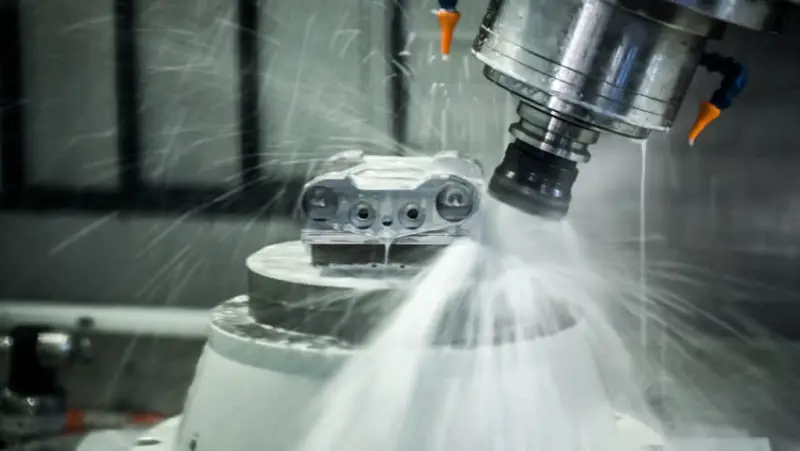
AI’s growth is expanding demand for physical equipment, from data-center cooling systems to semiconductor production tools and industrial robots. That creates potential work for precision machining suppliers across several hardware supply chains, even when those suppliers never make an AI product themselves.
The connection is indirect: more AI computing requires more infrastructure, and that infrastructure relies on mechanical components with application-specific dimensions, materials and finishes. For CNC manufacturers, the opportunity will depend on whether they can meet those requirements consistently and support changing designs from prototypes through production.
Computing growth needs physical infrastructure
Training and running AI models depends on data centers that house servers, networking and storage equipment, power systems, and cooling. The International Energy Agency (IEA) projects that global data-center electricity consumption will roughly double from 485 TWh in 2025 to around 950 TWh by 2030. Electricity use by AI-focused data centers is expected to grow about threefold over the same period.
Those facilities need more than processors and memory. Their equipment includes server racks, structural supports, cooling assemblies, power-management hardware and cable-management components. Some are fabricated, stamped, molded or assembled; others may call for CNC machining when the design needs complex geometry, controlled dimensions, a particular material or a specific surface finish.
Potential machined parts include brackets, housings, mounts, structural elements, connectors and components used in heat management. The specific process depends on each part’s design and production volume. Still, the broader chain is clear: more computing infrastructure means more equipment, which can create downstream demand for manufactured mechanical parts.
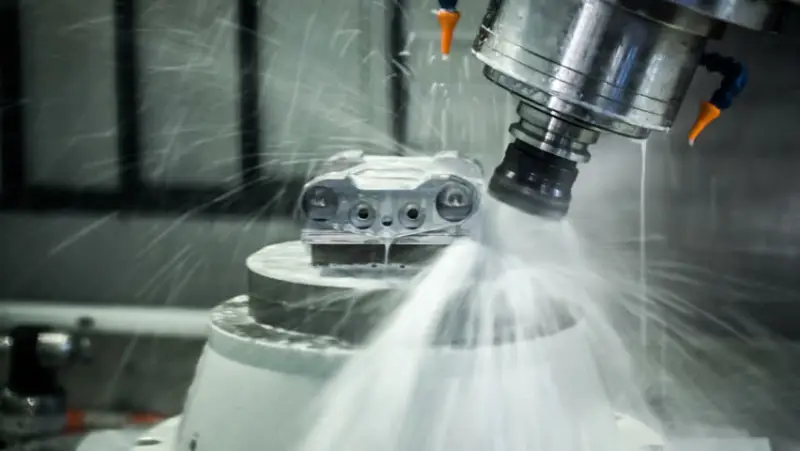
Chipmaking equipment adds another link
AI computing relies on accelerators, high-bandwidth memory (HBM), advanced processors and networking chips. Producing these devices requires sophisticated semiconductor processes, and rising demand has encouraged investment in chip production capacity and the equipment needed to run it.
SEMI forecast global semiconductor manufacturing equipment sales of $125.5 billion in 2025 and $138.1 billion in 2026, identifying AI-related chip innovation and capacity expansion as important drivers. A later SEMI projection, made in July 2026, put 2026 sales at $165.9 billion. It cited spending tied to leading-edge logic, advanced memory, testing and packaging.
These are forecasts, and the figures in the two projections differ. Both point to the scale of activity expected around semiconductor manufacturing equipment. That equipment can contain many precision mechanical parts, with requirements for close dimensional control, complex shapes, specified surface finishes, suitable materials and cleanliness.
So the potential machining work extends beyond equipment installed in data centers. AI chip demand can also increase demand for the machines used to manufacture, test and package those chips. A supplier may enter this chain by producing a component for a tool builder rather than for a semiconductor company directly.
Data centers raise demands on supporting systems
AI workloads are increasing the need for high-density computing. Compared with conventional data-center installations, these systems can put greater demands on power delivery, thermal management, equipment layout and the amount of hardware housed in a given space.
The IEA has described data-center electricity consumption as a strong growth area. It also reported that capital expenditure by five major technology companies exceeded $400 billion in 2025 and was expected to rise further in 2026. That spending covers a broad range of activity; it does not translate directly into machining orders. But it signals continued expansion in hardware-intensive infrastructure.
For machining suppliers, the useful distinction is between parts that suit high-volume processes and parts that need customization or tighter control. A large structural element may be better made through fabrication or another method. A smaller component with intricate features, tight tolerances or a less common material may be a better fit for CNC milling or turning.
Robotics connects AI to moving machinery
AI is also being combined with robots to improve perception, planning and interaction with physical surroundings. The International Federation of Robotics (IFR) has identified analytical AI, physical AI and generative AI as trends shaping robotics.
The installed base is already substantial: IFR reported 542,000 industrial robot installations worldwide in 2024, more than twice the number installed ten years earlier. The global operational stock reached about 4.66 million industrial robots that year. As AI makes robotic systems more capable and adaptable, more uses may become practical across manufacturing, logistics, warehousing, inspection, healthcare and other fields.
Each robot still needs a mechanical structure. Joints, housings, shafts, brackets, mounting plates, sensor supports and end-effectors are among the parts that may be required. Depending on design and production volume, some can be made by CNC turning, milling or grinding. Growth in AI-enabled robotics therefore adds another possible source of demand for machined parts.
Higher performance can raise part requirements
AI’s effect may show up in the technical demands placed on components as well as in order volumes. More compact equipment, greater computing density and demanding thermal conditions can make fit and interface quality more significant. Investment in advanced logic, HBM and packaging also points to more capable production equipment, where component performance is tied to the requirements of the full assembly.
Dimensional accuracy and geometric tolerances matter when parts must maintain precise relationships in an assembly. Depending on the application, flatness, perpendicularity or concentricity may need control. Surface roughness can affect sealing, sliding, heat transfer or assembly. Material selection depends on the job: aluminum alloys, stainless steels, copper alloys and engineering plastics each offer different combinations of weight, strength, conductivity, corrosion resistance and wear behavior.
Cooling and heat-transfer components may need specific geometries and carefully controlled mating surfaces. Semiconductor and other high-tech equipment may also place stricter demands on contamination control than general industrial machinery. These requirements vary by customer and application; AI-related work does not imply one universal specification.
Prototypes and changing designs suit flexible machining
Hardware development can involve frequent design revisions as equipment makers work through new product generations. That creates potential demand for prototypes, engineering samples, pilot production and low- to medium-volume parts.
CNC machining can suit this work because it produces complex metal and plastic components without dedicated molds or large-scale tooling investments. A supplier might make a small batch for development, then a larger quantity for validation and pilot production. Once a product reaches higher volumes, some parts may shift to other processes. Others may remain suitable for machining because their geometry, material, production volume or customization needs favor it.
That flexibility gives machining suppliers a possible role across the product-development cycle. It also means that customer demand can change as designs mature; prototype work does not guarantee that the same part will remain a machined component in full production.
Supplier capability determines who benefits
Expansion across AI-related industries will not automatically bring more work to every machine shop. Suppliers need capabilities that match the customer’s technical and commercial requirements. That may mean handling complex three-dimensional geometry, close tolerances, difficult-to-machine materials, inspection, finishing and repeatable production.
Process control is central when parts must fit into valuable, complex equipment. Suitable machine tools, stable methods, appropriate tooling, in-process measurement and coordinate measuring machines (CMM) can help maintain dimensional consistency. The right approach depends on the part and its acceptance criteria.
Engineering support can matter before machining begins. Design for Manufacturing (DFM) feedback can flag difficult features, unnecessary tolerances, limited tool access or problematic wall thicknesses. Addressing those issues early can make a part easier to produce and support the move from prototype to repeat orders.
Material and finishing range also affect the work a supplier can take on. AI-related equipment may use aluminum alloys, stainless steels, copper, titanium or engineering plastics, depending on the application. Finishing needs can range from deburring and cleaning to anodizing, passivation, electropolishing or plating. A machining company may provide some services itself and coordinate others.
Customers may also require inspection records. Depending on the application, quality work can include dimensional checks, CMM measurement, surface-roughness measurement, material certification or coating verification. Reliable documentation can support supplier qualification for technically demanding manufacturing programs.
Follow the hardware chain
AI connects several hardware-intensive industries: computing demand supports data-center and server expansion; chip demand supports semiconductor capacity; manufacturing capacity requires production equipment; and robotics and automation add more mechanical systems. Each link has different parts, volumes and process needs, so none guarantees machining work by itself.
TSMC reported strong AI-related demand throughout 2025 and described semiconductor demand as a fundamental part of the AI growth trend. That is one indication of activity in the chip supply chain, while the IEA, SEMI and IFR figures point to expansion in data centers, production equipment and robotics. For CNC suppliers, the practical takeaway is to map the specific applications they can serve and build transferable strengths in precision, inspection, engineering support, material knowledge and flexible production.
AI may be a digital technology, but its expansion has a growing physical footprint. The machining opportunity lies in the equipment and infrastructure behind it—and in the suppliers able to make their components to the requirements of each system.
 Choosing Single, Double, Welded Flap and Repair Keder for Fabrication
 Houston Engineering Team Builds a Welcoming Golf Tournament at East River 9
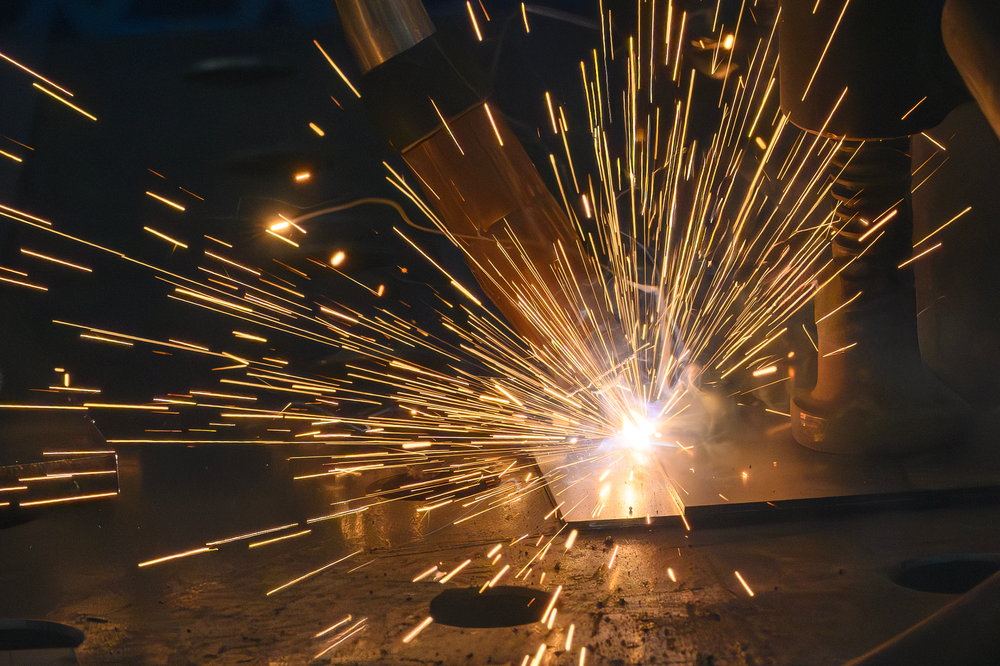 MIG Transfer Modes: Choosing Between Short Circuit, Spray and Pulse