Hanron Space Targets Field Trials for Rubidium Quantum Radar Sensor
Hanron Space has demonstrated over-the-air signal demodulation with a rubidium sensor and aims to test a shoebox-sized unit in the field within a year.
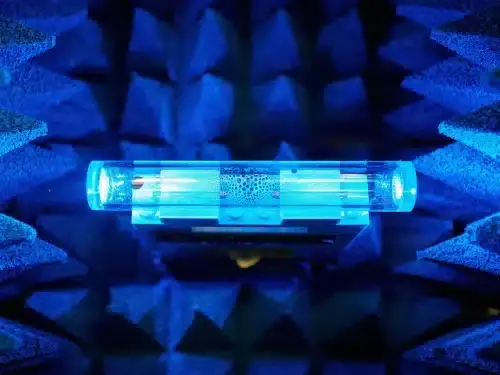
Hanron Space’s rubidium atom sensor has passed an early test that matters for practical radar work: it detected and demodulated frequency-modulated signals transmitted over the air. The company now plans to shrink the laboratory system to a shoebox-sized device and begin field trials within a year.

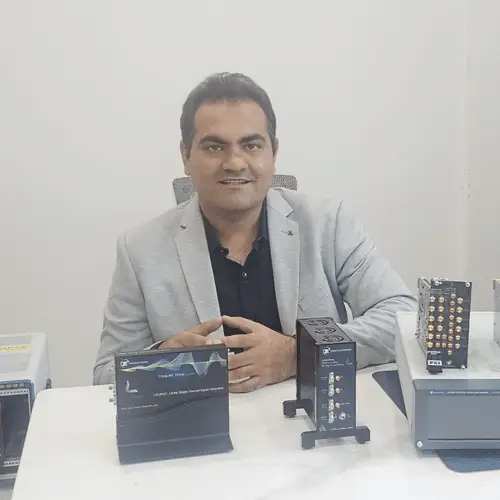
The sensor is being developed as one part of a hybrid radar architecture. Hanron Space founder Nikhil Mitaliya says the design is intended to work alongside conventional radar equipment, rather than replace the entire signal chain with a quantum system. That choice makes integration and comparative field testing central to the next stage of development.

From atomic response to a demodulated signal
The sensor uses rubidium atoms to detect weak radar and communication signals. In the reported demonstration, Hanron Space transmitted frequency-modulated signals through the air and then recovered their modulation with the atomic sensor. That result shows signal detection and demodulation under an over-the-air test, though the company has not provided measurements such as operating frequency, sensitivity, range, noise performance or error rate.
Those missing figures will matter to engineers assessing how the sensor might fit into a receiver chain. A successful demodulation demonstration establishes that the device can recover information from a transmitted signal in the tested setup; it does not, on its own, quantify performance against a conventional receiver or establish detection range under field conditions. The planned trials should help clarify how the laboratory result translates when the sensor is packaged and operated outside the lab.

Hanron Space describes the technology as being at Technology Readiness Level (TRL) 4. The company’s next engineering task is to miniaturise the system while preserving its ability to detect and process signals. A shoebox-sized form factor would make the device easier to deploy for field evaluation, but no details have been given about its weight, power demand, environmental limits or interface requirements.
A hybrid route for weak returns
The intended radar use case is detection of targets that produce weak returns because of their small radar cross-sections. Such signals can be difficult for conventional receivers to distinguish. Sensitivity is therefore a key development objective for Hanron Space, although the company has not disclosed a sensitivity figure or a direct comparison with existing radar receivers.
The hybrid architecture shapes the practical question. A quantum sensor that operates alongside conventional radar could be assessed as an additional sensing path, with field work showing whether its output contributes useful information in the system. That approach also leaves open engineering questions about how the sensor’s measurements are combined with conventional radar data, how it behaves amid other signals, and what equipment is needed to operate it. The company has not yet described those implementation details.

Mitaliya said Hanron Space is not building a fully quantum, end-to-end radar. Instead, its system is intended to complement conventional radar. For engineers, that distinction puts the focus on measurable system performance: whether the sensor can detect signals that an existing receiver struggles with, and whether it can do so reliably in a deployable package.

Field testing is the next technical gate
The company is targeting field trials within a year, after developing the smaller unit. It also aims to commercialise its hybrid quantum radar within the next two years. These are company targets, rather than confirmed delivery dates. Progress will depend on miniaturisation and on how the device performs when exposed to real operating conditions.
Field evaluation can test factors that an over-the-air laboratory demonstration does not settle, including repeatability, operation alongside conventional equipment and performance in the presence of competing signals. The source provides no trial protocol or test location, so the scope of that evaluation remains unclear. Results tied to operating conditions and receiver comparisons would give potential users a firmer basis for judging where the sensor fits.
Hanron Space has also identified spectrum monitoring and drone detection as possible applications. Healthcare is mentioned as a longer-term possibility, but no specific sensing task or development plan is provided for that area. For now, the clearest technical milestone is the move from a laboratory setup to a compact instrument that can be evaluated outside it.
The next useful evidence will be the shoebox-sized sensor’s measured performance: what signals it detects, under what conditions, and how its results compare with conventional radar equipment. Until those figures emerge, the over-the-air demodulation test marks a development step, while field trials will determine whether the atomic sensor offers a practical addition to radar systems.
 Choosing Single, Double, Welded Flap and Repair Keder for Fabrication
 Houston Engineering Team Builds a Welcoming Golf Tournament at East River 9
 MIG Transfer Modes: Choosing Between Short Circuit, Spray and Pulse