Connected Home Medical Monitoring Devices Forecast to Reach 159.7 Million by 2030
Berg Insight projects 11.5% annual growth as diabetes, sleep therapy and remote cardiac care expand connected monitoring beyond hospitals.
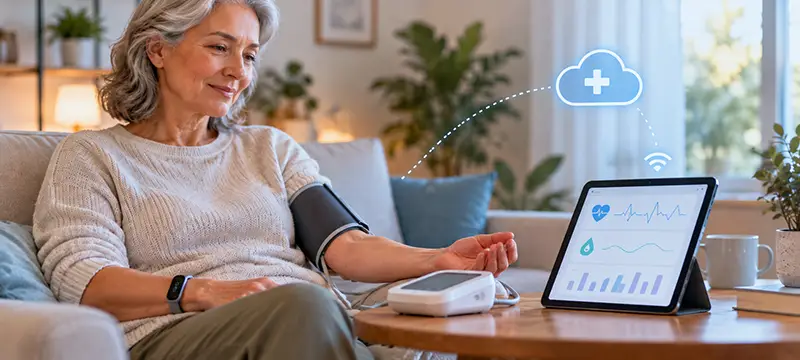
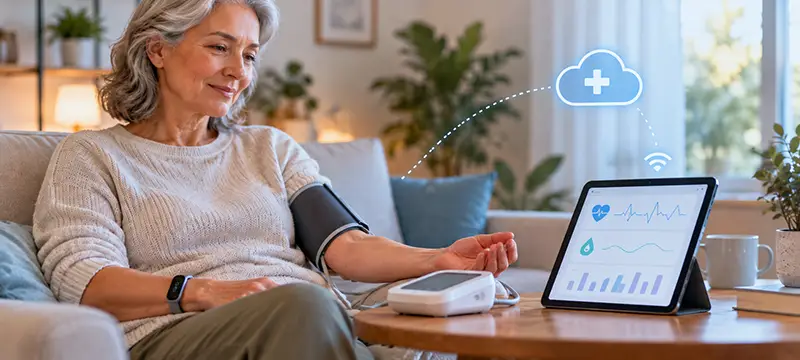
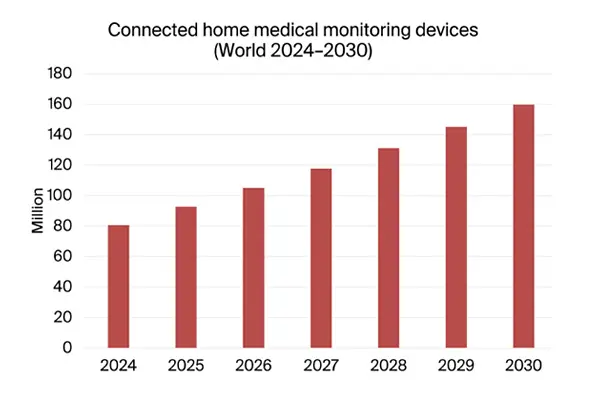
Connected medical monitoring at home is moving from isolated device links towards a broader care system combining measurements, software and clinical follow-up. Berg Insight estimates that 92.7 million connected home medical monitoring devices were in use worldwide at the end of 2025. It projects 159.7 million by 2030, a compound annual growth rate (CAGR) of 11.5%.
The forecast covers devices used by patients enrolled in structured healthcare programmes. Consumer fitness trackers and personal wellness products used outside prescribed care are excluded. That distinction makes the estimate a measure of connected clinical monitoring rather than the much wider wearable-device market.
Three established applications anchor the market
Sleep therapy, diabetes management and implantable cardiac rhythm management (CRM) account for much of the current installed base. Each involves a different monitoring task: checking treatment use, following glucose levels and insulin delivery, or collecting data from implanted cardiac devices. As these applications expand, the technical challenge increasingly includes getting useful information to care teams in a form they can act on.
Sleep therapy is the largest segment. ResMed holds a leading position, with Philips, BMC Medical and Löwenstein Medical Technology among the other manufacturers named by Berg Insight. The number of remotely monitored sleep therapy patients has more than doubled since 2018. Berg Insight links much of that increase to treatment compliance monitoring requirements introduced in the US and Europe.
Diabetes management is the second-largest segment, with 19.5 million connections worldwide in 2025. Growth is being supported by wider use of continuous glucose monitoring (CGM) and connected insulin delivery systems. The companies identified in this area include Abbott, Dexcom, Insulet, Tandem Diabetes Care and MiniMed. Together, these devices can connect repeated glucose measurements with information about insulin delivery, giving care teams a more continuous view than occasional measurements alone.
Implantable CRM is a mature connected application. Medtronic, Abbott, Boston Scientific and BIOTRONIK have incorporated connectivity into implantable devices for more than two decades. Berg Insight expects diabetes management, remote electrocardiogram (ECG) monitoring and medication compliance monitoring to be among the fastest-growing categories through 2030.
Data delivery has to fit clinical work
Adding a radio or network connection to a medical device makes remote data collection possible; it doesn't by itself make the information useful in care. Providers need monitoring data to reach the right people, be understandable alongside other patient information and support a timely response. As programmes cover more conditions and device types, connecting the data stream to existing care processes becomes a central part of the system design.
Software and service platforms help manage that layer. Companies named by Berg Insight include Huma Therapeutics, Doccla, Teladoc Health, CareSimple and Current Health. Their platforms support the collection, analysis and management of patient information across remote care programmes. The practical role of such software is to help coordinate information from devices and make it available to professionals responsible for follow-up.
For device makers and IoT providers, that broadens the work beyond producing connected hardware. Interoperability matters when patients use different device types, and data delivery has to remain dependable in varied home environments. Integrators and connectivity providers also have to account for differing collection needs across applications. A system designed around one measurement or one device may not meet the needs of a programme that spans several conditions and care providers.
Analytics must turn measurements into useful signals
Berg Insight points to artificial intelligence and machine learning as tools that may help healthcare organisations identify early signs of patient deterioration, support clinical decision-making and enable more proactive care outside traditional facilities. These techniques operate on the information collected by monitoring devices; their value depends on whether the resulting analysis helps professionals decide when follow-up is needed.
More frequent measurements can give clinicians a richer view of a patient's condition, but they also create more information to review. The useful measure of progress, then, isn't simply the volume of data collected. It is whether the monitoring setup can present relevant changes clearly enough for healthcare professionals to interpret and respond to them.
The forecast points to continued growth in the number of devices, while the system around each device becomes more consequential. Home monitoring increasingly brings together medical hardware, connectivity, software and analytics as part of routine care. For teams building or deploying these systems, the key question is how reliably those parts work together across patient settings and clinical workflows.
More details are available in Berg Insight's mHealth and Home Monitoring report brochure.
 Choosing Single, Double, Welded Flap and Repair Keder for Fabrication
 Houston Engineering Team Builds a Welcoming Golf Tournament at East River 9
 MIG Transfer Modes: Choosing Between Short Circuit, Spray and Pulse