DMC Chicago Uses Teamwork and Misdirection to Solve a Masquerade Mystery
DMC Chicago’s after-work mystery asked teams to trade clues, question suspects and decide who killed the billionaire. Only one team named the culprit.
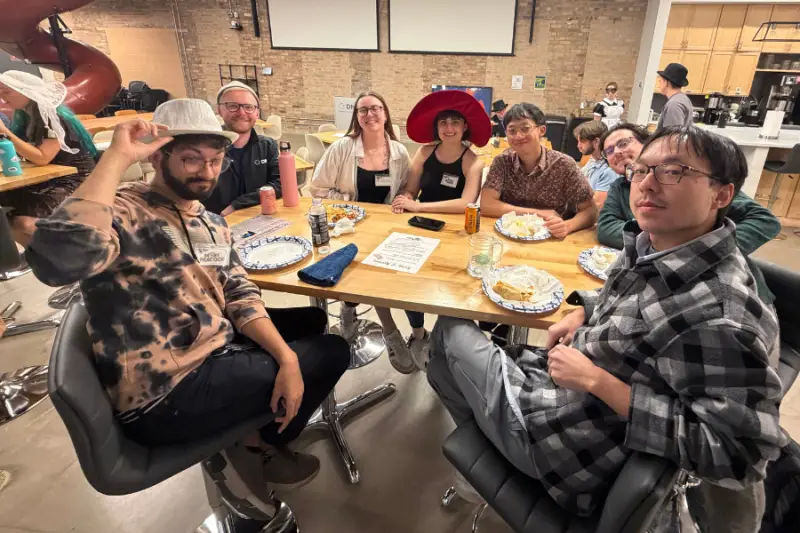
A team can work well together and still reach the wrong answer. DMC Chicago’s Halloween season mystery put that tension at the center of an after-work event: attendees had to pool clues, question suspects and decide who was responsible for a fictional billionaire’s death. Only one team correctly identified the culprit.
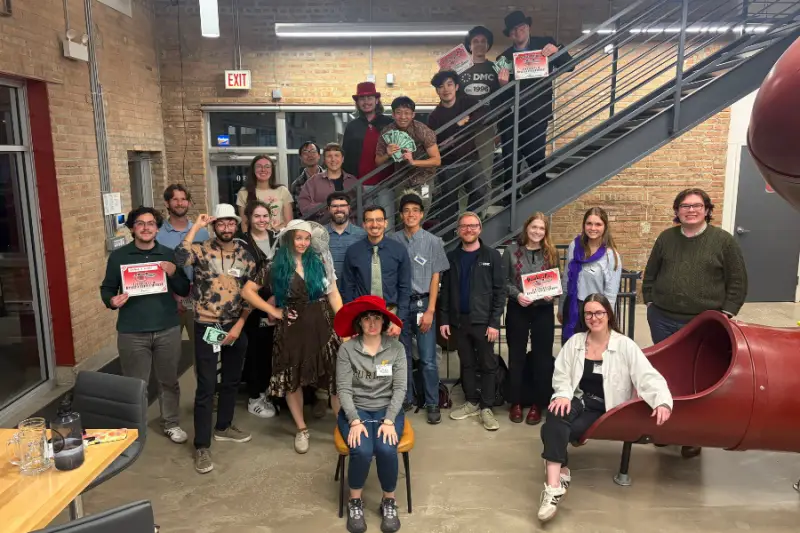
Hosted by The Murder Mystery Company, the event gave DMC employees a break from their usual engineering problems and a shared puzzle with shifting motives and deliberate misdirection. The point was less about applying a formal method of investigation than seeing how colleagues exchanged information, built a theory and argued for it when the evidence remained open to interpretation.
Roles shaped the investigation
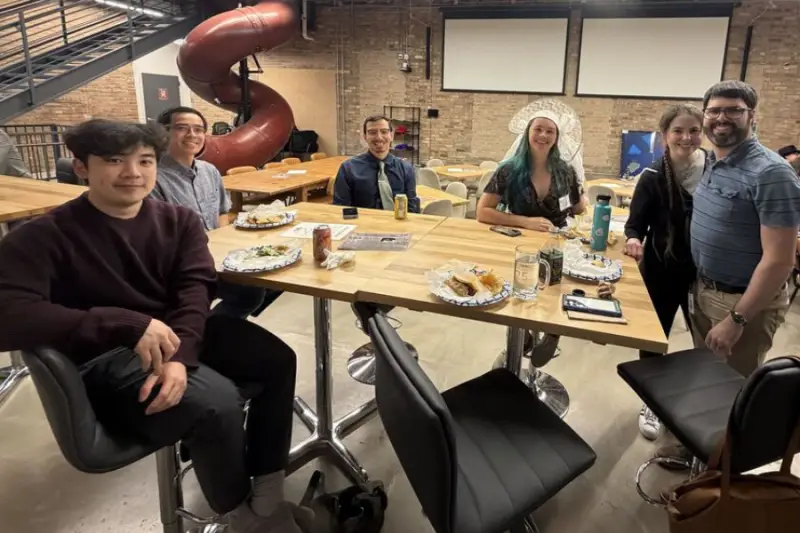
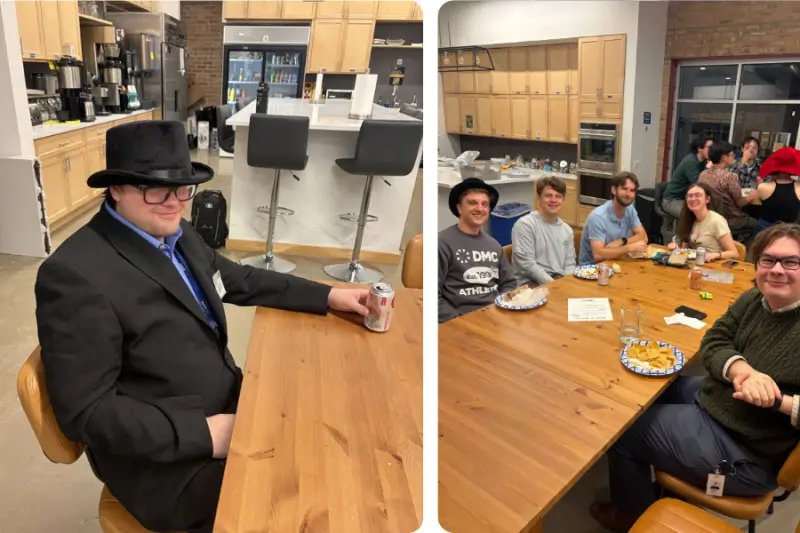
The mystery, Midnight at the Masquerade, was set at the Billionaires’ Club Annual Masquerade Ball. Seven characters populated the story: an actress, a married couple, an eccentric billionaire, a bachelor, a butler and a doctor. Each received a costume piece to make the role recognizable, including a bright red hat for the actress and a bowler hat for the billionaire.
DMC IT Specialist RJ Hughes played the billionaire, host of the masquerade and the victim at its center. The other characters carried scripts, motives and information to reveal as the scenarios unfolded. That setup gave the teams more than a list of clues to inspect: they had to decide whom to question and how much weight to give each person’s account.
Attendees divided into teams, with one member from each group taking on a character. The rest of the group could exchange clues, question characters and try to guide suspicion toward or away from a suspect. In practice, that meant each team had to coordinate its questions and make sense of information gathered across the room.
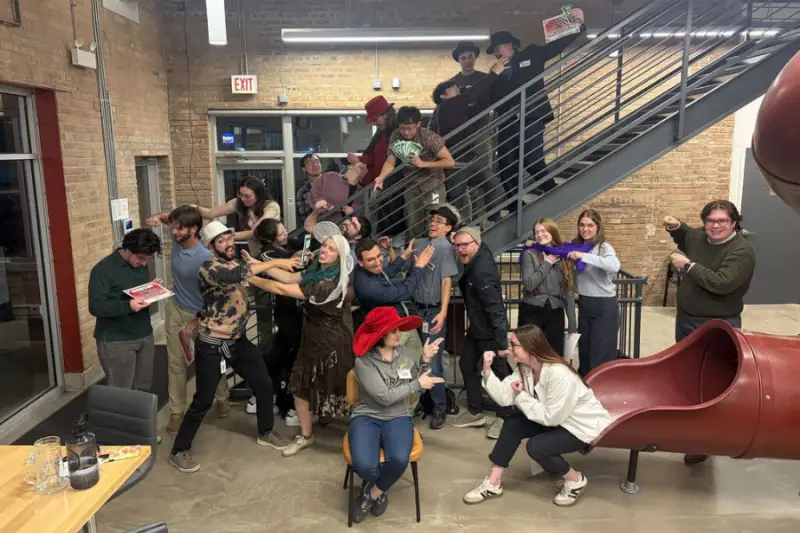
Clues, confidence and misdirection
William Chen, who was on Team Mort, recalled that his group backed the idea that Mort’s wife was responsible. “We fully leaned into the bit that his wife did it…we were wrong,” he said. The team stuck with its theory long enough to steer suspicion toward an innocent character.
Other groups approached the puzzle differently. Some focused on investigating the clues; others made a sport of leading their rivals down the wrong trail. Both styles required communication, but only one was aimed squarely at reaching the right conclusion. As Chen described it, teams exchanged money for information about characters, then used what they learned to decide whom they thought had killed the billionaire.
That distinction made the event’s central challenge a social one as much as a reasoning exercise. Collecting more information didn’t automatically settle the question: teams still had to judge which details mattered, compare accounts and agree on a suspect. And when a team committed early to a theory, presenting it convincingly could become part of the game, even if the supporting clues didn’t hold up.
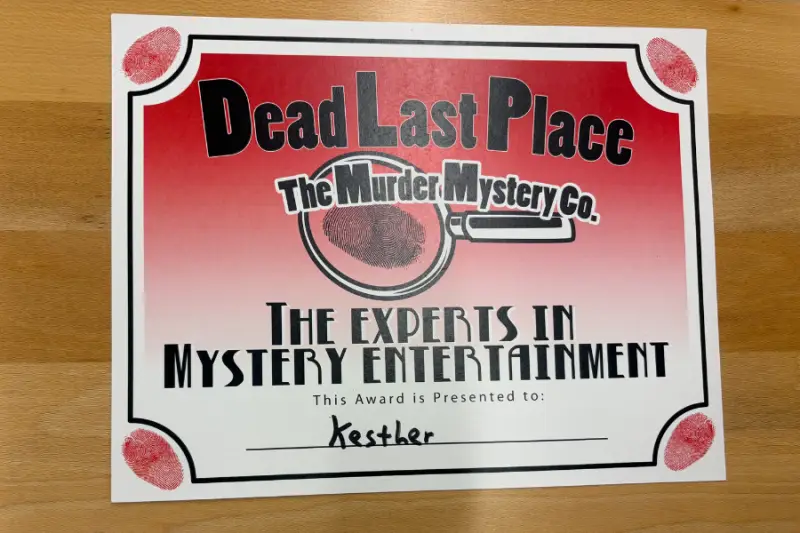
Only one team identified the culprit. Another received a certificate for the “worst guess,” marking a miss that had become part of the evening’s entertainment.
Enjoying the story mattered, too
For Kaitlyn Heistand, a member of DMC Chicago’s Admin team, the actors and the way they kept the experience engaging stood out. She also enjoyed seeing colleagues who were usually reserved at work take on their characters. Heistand and a teammate spent more time creating a funny explanation for their guess than trying to solve the mystery, she said.
That response captures the event’s appeal: solving the puzzle was one way to take part, but not the only one. The roles gave quieter attendees a reason to join the conversation, while costumes and a shared fictional setting let colleagues play off one another in ways their usual projects may not invite.
In the end, the actress, played by Gabrielle, wife of Embedded Engineer John Nicholas, was revealed as the person responsible for the fictional death. Most partygoers hadn’t suspected her. The reveal closed the mystery, while the competing theories and wrong turns supplied much of the fun along the way.
For DMC Chicago, the evening turned collaboration into a game: people had to share what they knew, compare interpretations and stand behind a team decision. The result was a different kind of problem-solving session, with costumes, theatrical clues and a culprit hiding in plain sight.
===END=== Choosing Single, Double, Welded Flap and Repair Keder for Fabrication
 Houston Engineering Team Builds a Welcoming Golf Tournament at East River 9
 MIG Transfer Modes: Choosing Between Short Circuit, Spray and Pulse