DMC Retro Game Night Turns a Repurposed Micro-PC Into a 2,750-Game Setup
A Chicago office micro-PC running Batocera Linux anchors a game night with more than 2,750 titles, handheld systems and tabletop games.
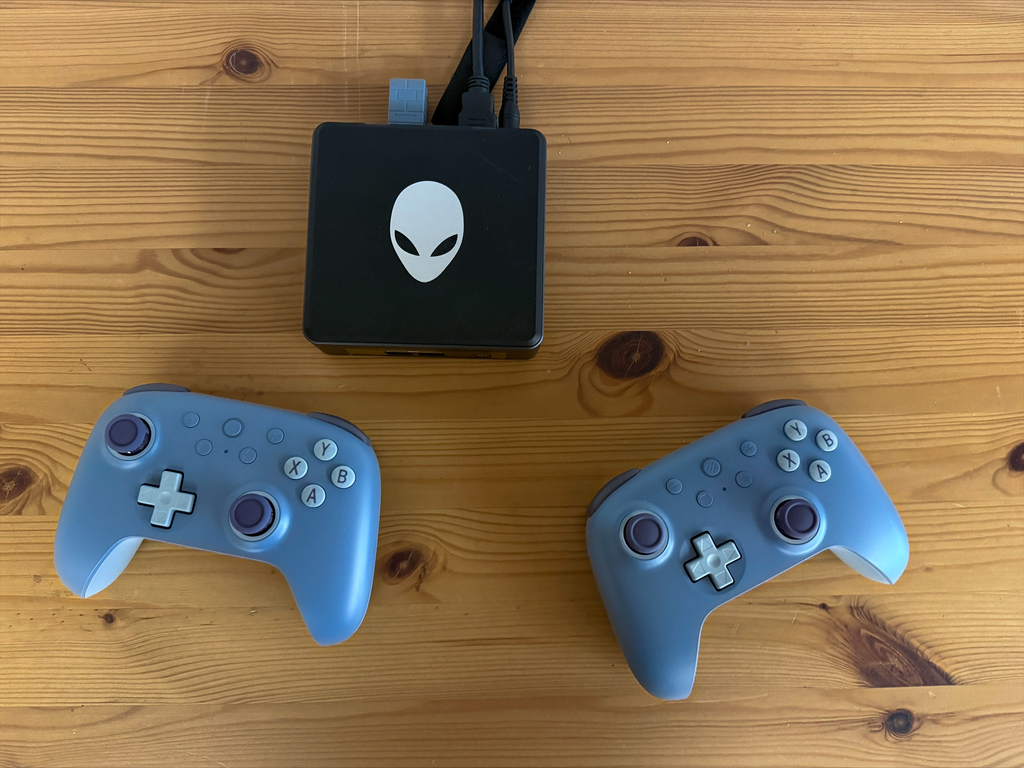
A micro-PC found in a Chicago office IT closet became the starting point for a game night with more than 2,750 titles. DMC IT team member RJ Hughes installed Batocera Linux on the machine, added two controllers and set it up in the kitchen. The event grew from that small reuse project into an evening of console games, handheld systems and tabletop play.
A spare PC gets another job
Hughes came across the micro-PC while exploring older IT equipment at DMC’s Chicago office. The machine still powered on, though it had been put aside. He installed Batocera Linux, which provides access to classic games, and connected two controllers. The system remains in the kitchen, where coworkers can use it for a quick match during lunch.
The setup also gave Hughes a way to turn an existing piece of equipment into the centerpiece of an Activity Fund event. Rather than organizing around a single console or title, he brought in handheld devices and arranged access to games from several eras. That range let participants choose how to play: on the projected screen, with a controller in hand, or on a portable system.
Repurposing the PC made the kitchen setup useful beyond the event itself. It’s a practical example of how an idle computer can take on a new role when it still has power and can run suitable software. The account doesn’t specify the machine’s hardware, the Batocera version or how the game collection was assembled, so the setup’s performance and compatibility with other systems can’t be inferred. What’s clear is that Hughes had enough working equipment to make a shared gaming station.
Many ways to join in
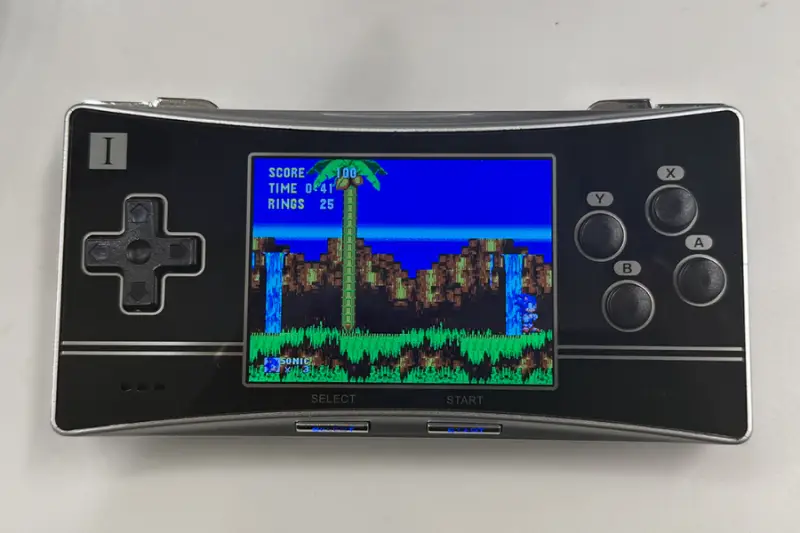
At the event, attendees could choose among more than 2,750 games. The selection ranged from arcade and Atari favorites to titles associated with later Xbox and PlayStation eras. Hughes also brought handheld devices, giving people an alternative to taking turns at the shared screen.
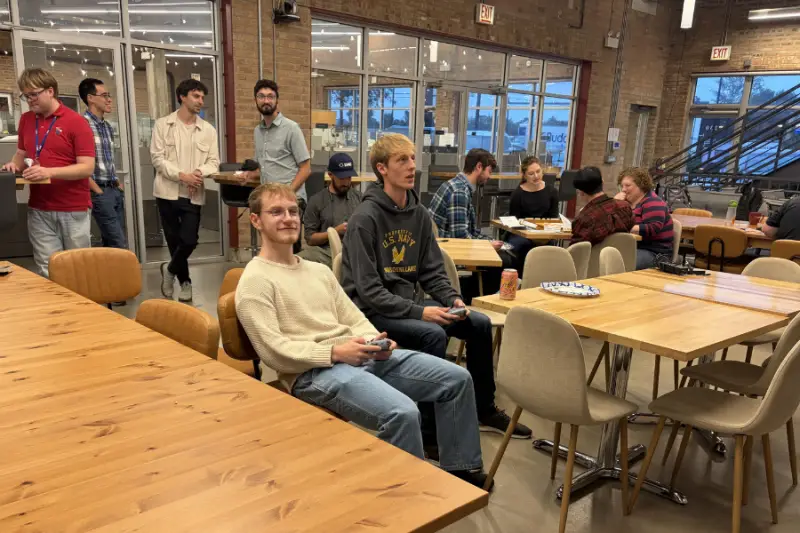
“RJ put together so many cool systems and emulators that I had never even touched before,” Brandon recalled. “It was awesome getting to play with other DMCers.” His comment points to one of the evening’s draws: people could try systems and games that were unfamiliar to them while sharing the experience with colleagues.
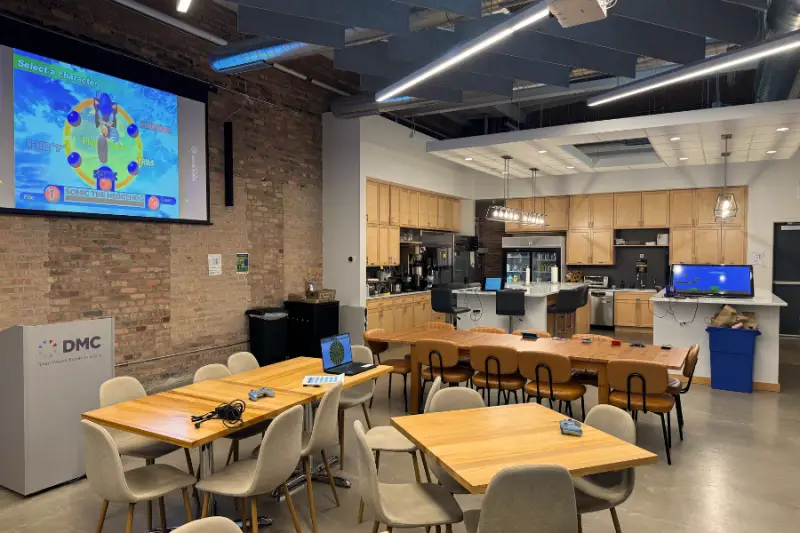
The micro-PC was connected to large projection screens in the downstairs kitchen. There, participants took turns with 007: Nightfire and The Legend of Zelda. Other groups played Mario Kart, Super Smash Bros. and Tecmo Bowl. The mix created room for different kinds of play, from quick competitive rounds to revisiting games people hadn’t touched in years.
More than 2,750 available titles is a large menu for a single evening, but the event didn’t need everyone to play the same thing. A shared projection setup made spectators part of the action, while handhelds allowed smaller groups to play at their own pace. That variety also made it easy for participants to move between games without the evening depending on one console or one match.
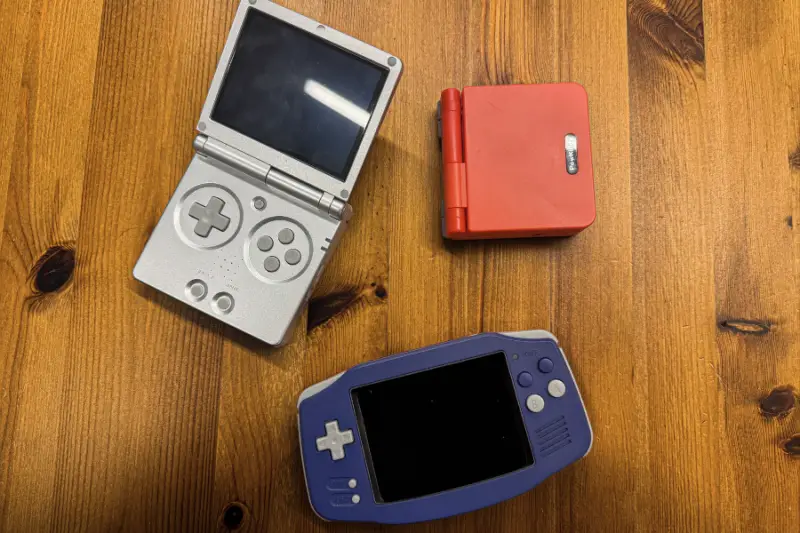
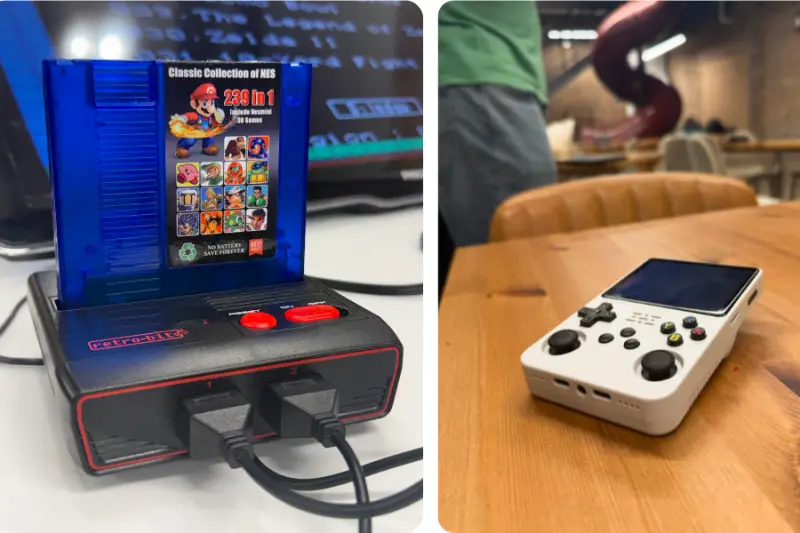
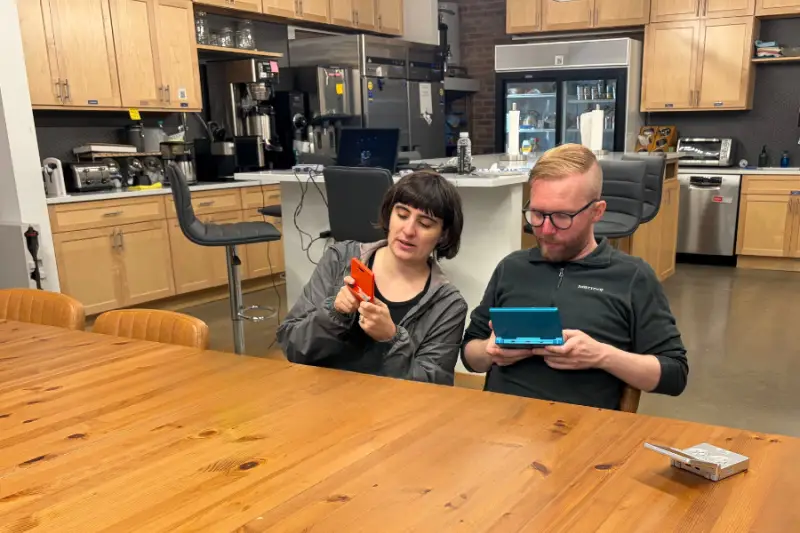
Tabletop games broadened the mix
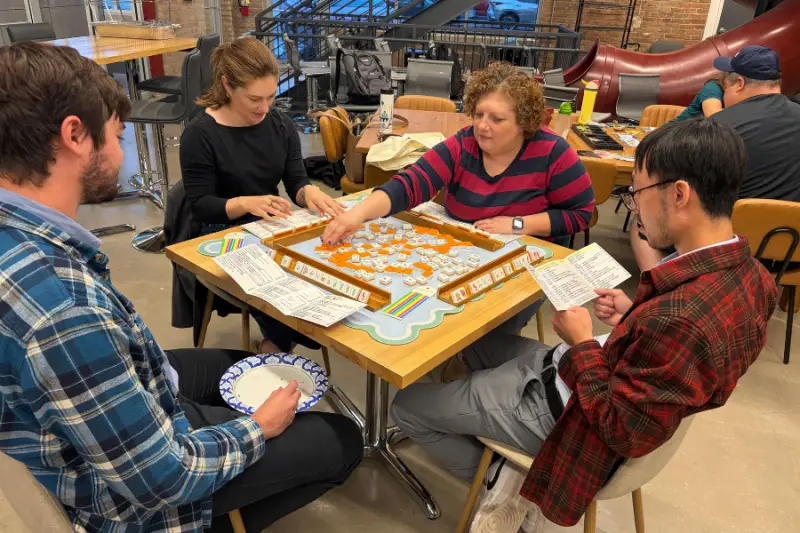
Video games weren’t the only option. Between rounds, teammates could play American Mahjong or gather around Ark Nova for a tabletop strategy game. Those activities offered a different pace and let people join in even if they weren’t looking for a console match.
The mix matters for an event built around a shared interest rather than a single competition. Some participants chased high scores on the big screens; others chose a handheld or a tabletop game. Familiar titles created common ground, while the range of systems gave attendees a chance to discover something new. The result was an evening structured around choice and informal play, with coworkers moving between activities as they pleased.
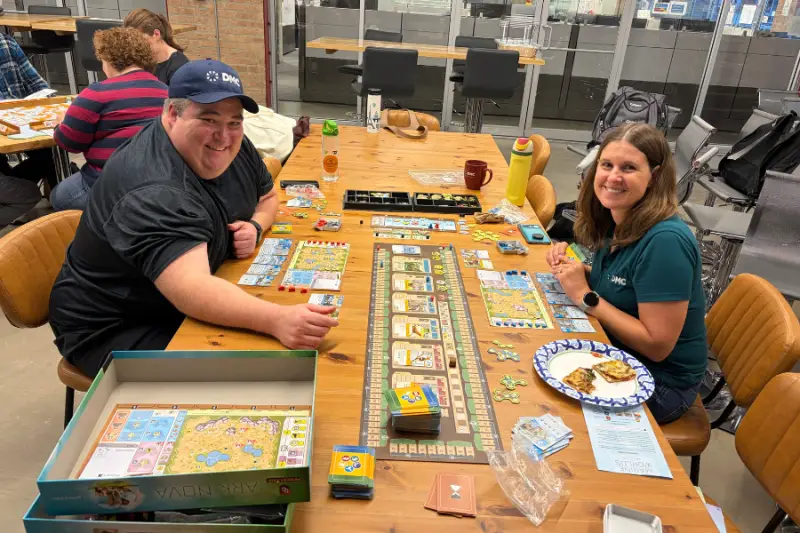
The game station stays in the kitchen
Retro Game Night began with a micro-PC Hughes found in storage, but its legacy is a permanent feature of the Chicago kitchen. The computer is still available for casual play, so the event’s central setup can support quick matches outside the organized gathering.
For DMC, the evening offered a chance for coworkers to spend time together around interests they share outside work. For the equipment, it meant a second use for a machine that still had power and could run the required software. With the micro-PC ready in the kitchen and handheld systems part of the event, another round can start without rebuilding the setup from scratch.
 Choosing Single, Double, Welded Flap and Repair Keder for Fabrication
 Houston Engineering Team Builds a Welcoming Golf Tournament at East River 9
 MIG Transfer Modes: Choosing Between Short Circuit, Spray and Pulse